

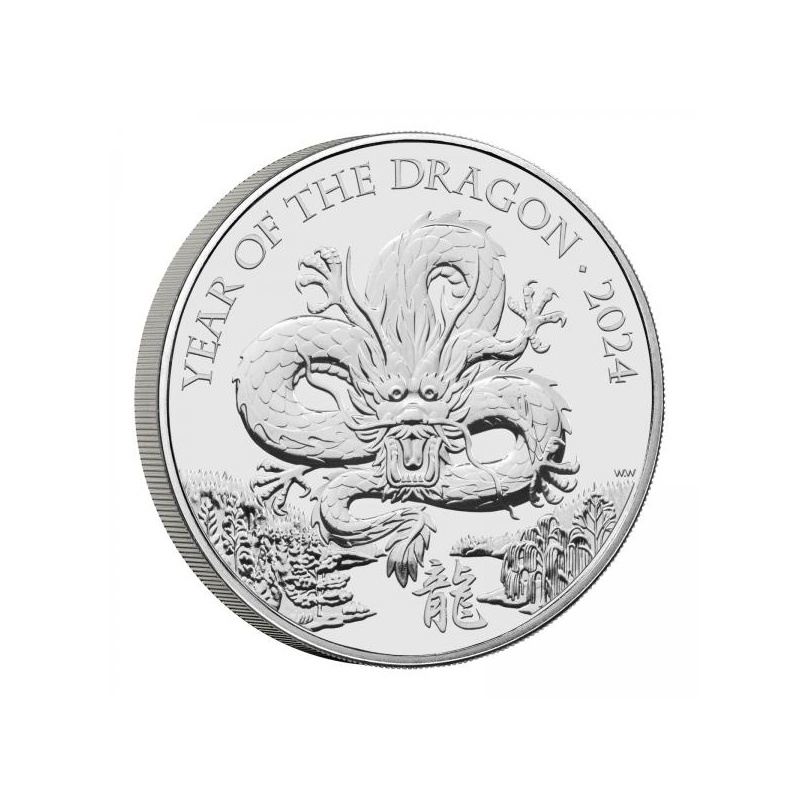
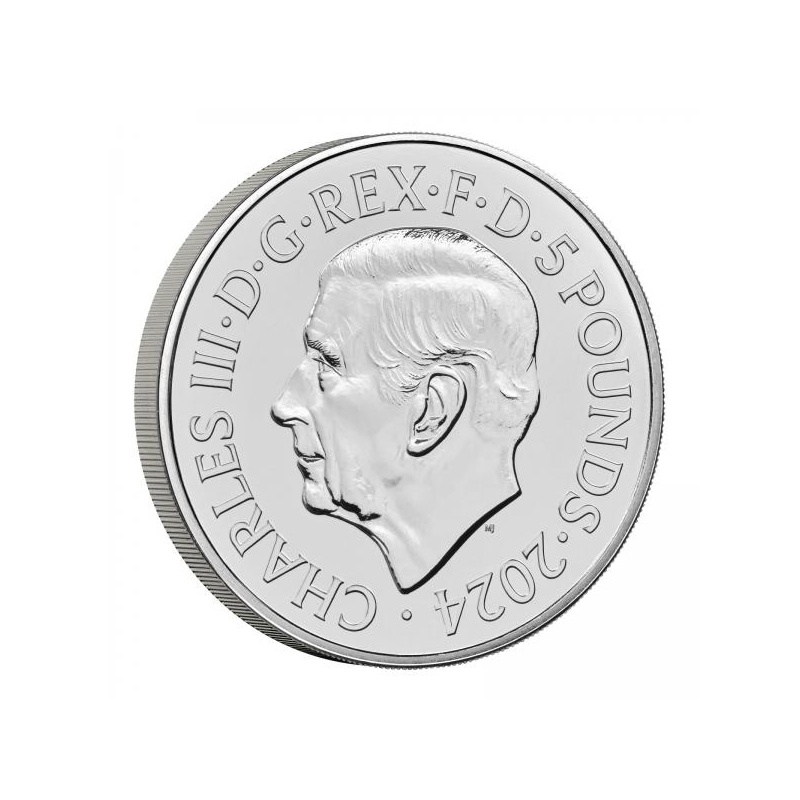
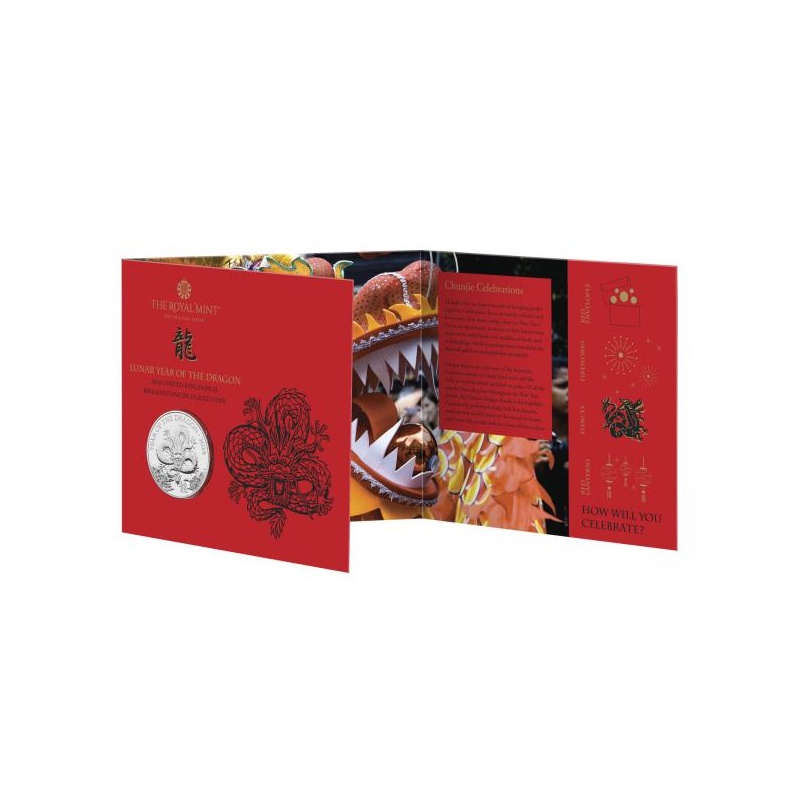
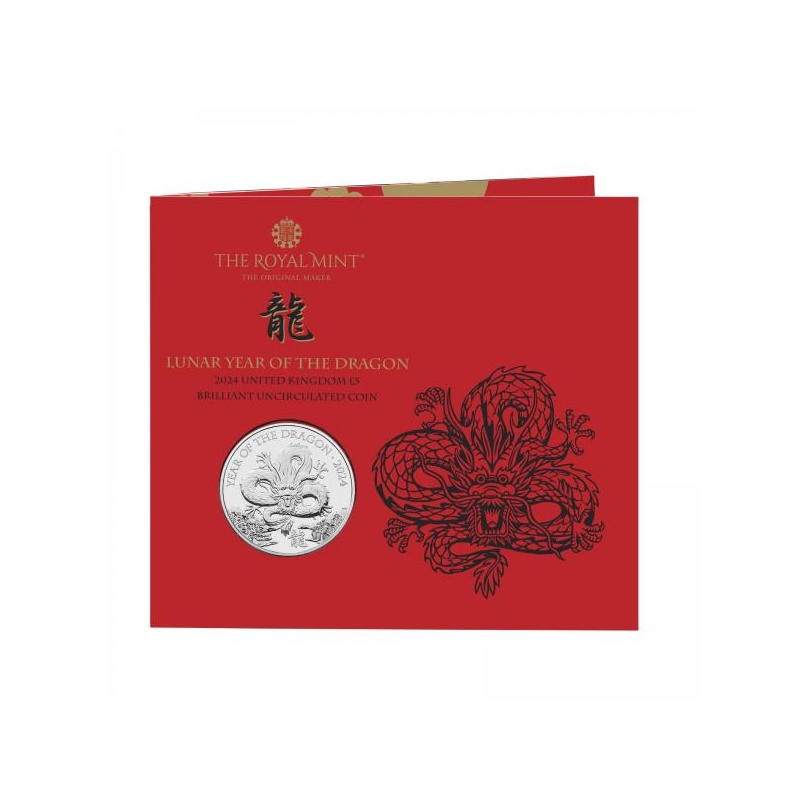
Lunar Year of the Dragon 2024 United Kingdom £5 Brilliant Uncirculated Coin
Price:
25,00 €
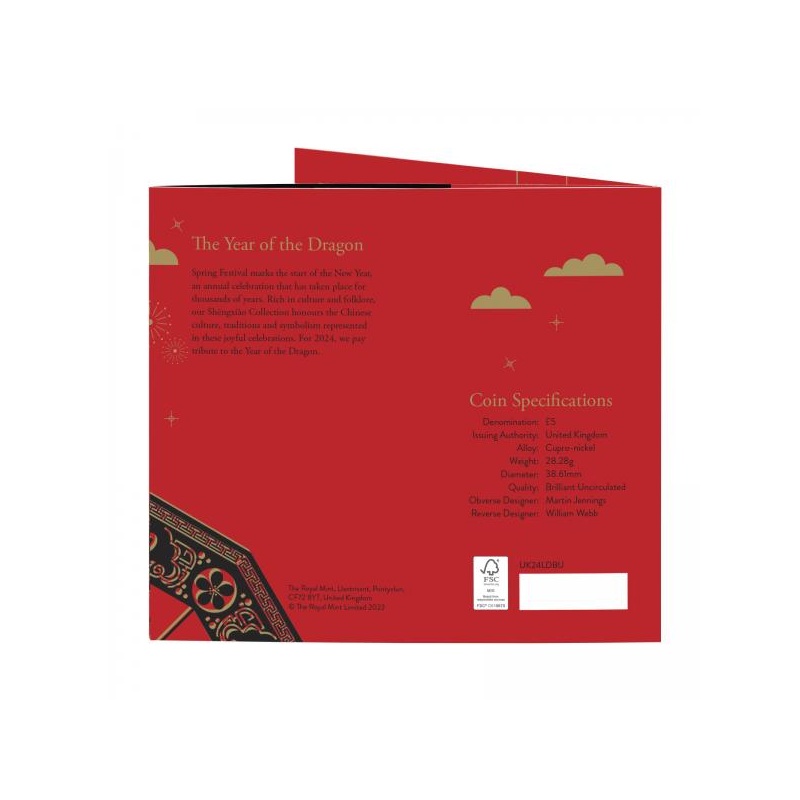
Denomination: 5£
Alloy: cu/ni
Weight: 28.28 g
Diameter: 38,6 mm
Quality Brilliant Uncirculated
Year: 2024
A beautiful celebration of the most significant symbol in Chinese culture
The first Lunar coin to feature the official coinage portrait of His Majesty The King
In 2024, Chinese New Year, The Year of the Dragon starts on 10 February. A joyful time that is marked by communities all over the world, friends and family will gather to enjoy traditional food, watch firework displays and gift children money in red envelopes. Each year is characterised by one of 12 zodiac animals, and 2024 sees the dragon in the ascendancy. Wise and powerful, the dragon is China’s most important cultural symbol and has come to represent confidence, courage and adventurousness. People born under its zodiac sign are said to possess these traits
Alloy: cu/ni
Weight: 28.28 g
Diameter: 38,6 mm
Quality Brilliant Uncirculated
Year: 2024
A beautiful celebration of the most significant symbol in Chinese culture
The first Lunar coin to feature the official coinage portrait of His Majesty The King
In 2024, Chinese New Year, The Year of the Dragon starts on 10 February. A joyful time that is marked by communities all over the world, friends and family will gather to enjoy traditional food, watch firework displays and gift children money in red envelopes. Each year is characterised by one of 12 zodiac animals, and 2024 sees the dragon in the ascendancy. Wise and powerful, the dragon is China’s most important cultural symbol and has come to represent confidence, courage and adventurousness. People born under its zodiac sign are said to possess these traits
Sarnased tooted
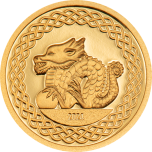
Country: Mongolia
Year: 2024
Face Value: 1000 Togrog
Gold: 99.99%
Weigh: 0.5 g
Size: 11 mm
Quality: Proof
Mintage: 5000
In Chinese mythology, dragons are majestic beasts that dwell in rivers, lakes, oceans and roam the skies. Originally a rain deity, the Chinese dragon is associated with heavenly beneficence and fertility.
Year: 2024
Face Value: 1000 Togrog
Gold: 99.99%
Weigh: 0.5 g
Size: 11 mm
Quality: Proof
Mintage: 5000
In Chinese mythology, dragons are majestic beasts that dwell in rivers, lakes, oceans and roam the skies. Originally a rain deity, the Chinese dragon is associated with heavenly beneficence and fertility.
169,00 €
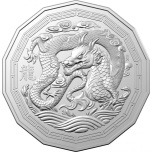
Face valie 0,5 AUD
Metal: copper/nickel
Weight: 15,37 g
Diameter: 31,51 mm
Mintage: unlimited
In 2024 we celebrate the Lunar of the Dragon. People who are born under this sign are said to be enthusiastic, confident and 'natural born leaders'. This 2024 50c Uncirculated Tetradecagon Coin, with it's traditional and auspicious design, will make an honored and traditional gift for Chinese New Year.
Metal: copper/nickel
Weight: 15,37 g
Diameter: 31,51 mm
Mintage: unlimited
In 2024 we celebrate the Lunar of the Dragon. People who are born under this sign are said to be enthusiastic, confident and 'natural born leaders'. This 2024 50c Uncirculated Tetradecagon Coin, with it's traditional and auspicious design, will make an honored and traditional gift for Chinese New Year.
29,00 €
Kollektsioon
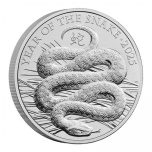
Denomination: 5£
Alloy: Cupro-nickel
Weight: 28.28 g
Diameter: 38,6 mm
Quality Brilliant Uncirculated
Year: 2025
On 29 January 2025, the Chinese New Year ushers in the Year of the Snake. A joyful time marked by communities worldwide, friends and family will gather to enjoy traditional food, watch firework displays and gift children money in red envelopes. Each year is characterised by one of 12 zodiac animals, and 2025 sees the snake in the ascendancy. Many regard the Year of the Snake as the year of strength. Clever and determined, individuals born under this sign are often known for their adaptability, intelligence and agility, can sometimes make advanced judgments that inform their goals, and frequently possess a mature outlook on life.
Alloy: Cupro-nickel
Weight: 28.28 g
Diameter: 38,6 mm
Quality Brilliant Uncirculated
Year: 2025
On 29 January 2025, the Chinese New Year ushers in the Year of the Snake. A joyful time marked by communities worldwide, friends and family will gather to enjoy traditional food, watch firework displays and gift children money in red envelopes. Each year is characterised by one of 12 zodiac animals, and 2025 sees the snake in the ascendancy. Many regard the Year of the Snake as the year of strength. Clever and determined, individuals born under this sign are often known for their adaptability, intelligence and agility, can sometimes make advanced judgments that inform their goals, and frequently possess a mature outlook on life.
25,00 €
Similar products
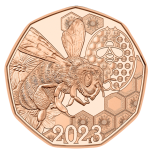
Quality: Special Uncirculated
Face Value: 5 Euro
Diameter: 28,5 mm
Copper: 99,9%
Total Weight: 8,5 g
Mintage: 50 000
Comes without packaging
Why talk when you can dance instead? That’s how bees communicate. Their ‘waggle dance’ is a wonderful phenomenon and one that not only bees themselves benefit from. Other living creatures, including humans, do so too, because bees are a vital part of our ecosystem: their welfare is our welfare.
In the early 20th century, the unusual behaviour of honeybees piqued the curiosity of behavioural scientist Karl von Frisch (1886–1982), who grew up in Vienna. He was intrigued by the way the insects sometimes move in circles and perform a figure of-eight ‘waggle dance’. In time, von Frisch discovered that when doing so, bees are in fact ‘speaking’ a dance language to the other members of their hive to show them where they can find pollen and nectar. Although originally disputed by other scientists, von Frisch’s theory eventually earned him the Nobel Prize in 1973.
The ‘round dance’, in which bees walks in a circle, turn around, then walk the same circle in the opposite direction, tells watching bees that there are flowers with pollen in the immediate vicinity of the hive. When the food source is further away, the waggle dance tells the watching bees how far it is and in which direction they can find it. A representation of the waggle dance is shown in the background on the coin’s reverse, behind a bee in flight and above a decorative honeycomb deign. The obverse of the nine-sided coin shows the coats of arms of all the provinces of Austria. Not just for nature lovers, whether in copper or silver, Waggle Dance makes for a great spring or Easter gift.
In the early 20th century, the unusual behavior of honey bees piqued the curiosity of behavioral scientist Karl von Frisch (1886–1982), who grew up in Vienna. He was intrigued by the way the insects sometimes move in circles and perform a figure-of-eight ‘waggle dance’. In time, von Frisch discovered that when doing so, bees are in fact ‘speaking’ a dance language to the other members of their hive to show them where they can find pollen and nectar. Although originally disputed by other scientists, von Frisch’s theory eventually earned him the Nobel Prize in 1973 for achievements in comparative behavioural physiology and pioneering work in communication between insects. It is not just bees themselves that benefit from this wonderful phenomenon, as other living creatures, including humans, do so too. Honey bees, wild bees and bumble bees are a vital part of the ecosystem: their welfare is our welfare.
Face Value: 5 Euro
Diameter: 28,5 mm
Copper: 99,9%
Total Weight: 8,5 g
Mintage: 50 000
Comes without packaging
Why talk when you can dance instead? That’s how bees communicate. Their ‘waggle dance’ is a wonderful phenomenon and one that not only bees themselves benefit from. Other living creatures, including humans, do so too, because bees are a vital part of our ecosystem: their welfare is our welfare.
In the early 20th century, the unusual behaviour of honeybees piqued the curiosity of behavioural scientist Karl von Frisch (1886–1982), who grew up in Vienna. He was intrigued by the way the insects sometimes move in circles and perform a figure of-eight ‘waggle dance’. In time, von Frisch discovered that when doing so, bees are in fact ‘speaking’ a dance language to the other members of their hive to show them where they can find pollen and nectar. Although originally disputed by other scientists, von Frisch’s theory eventually earned him the Nobel Prize in 1973.
The ‘round dance’, in which bees walks in a circle, turn around, then walk the same circle in the opposite direction, tells watching bees that there are flowers with pollen in the immediate vicinity of the hive. When the food source is further away, the waggle dance tells the watching bees how far it is and in which direction they can find it. A representation of the waggle dance is shown in the background on the coin’s reverse, behind a bee in flight and above a decorative honeycomb deign. The obverse of the nine-sided coin shows the coats of arms of all the provinces of Austria. Not just for nature lovers, whether in copper or silver, Waggle Dance makes for a great spring or Easter gift.
In the early 20th century, the unusual behavior of honey bees piqued the curiosity of behavioral scientist Karl von Frisch (1886–1982), who grew up in Vienna. He was intrigued by the way the insects sometimes move in circles and perform a figure-of-eight ‘waggle dance’. In time, von Frisch discovered that when doing so, bees are in fact ‘speaking’ a dance language to the other members of their hive to show them where they can find pollen and nectar. Although originally disputed by other scientists, von Frisch’s theory eventually earned him the Nobel Prize in 1973 for achievements in comparative behavioural physiology and pioneering work in communication between insects. It is not just bees themselves that benefit from this wonderful phenomenon, as other living creatures, including humans, do so too. Honey bees, wild bees and bumble bees are a vital part of the ecosystem: their welfare is our welfare.
19,00 €
Materiall: CuNi
Weight: 9g
Diameter: 26,9 mm
Mintage: 100 000
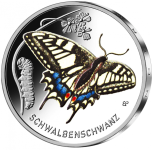
It is the third coin issued as part of the “Wonderful world of insects” series, which will see a total of nine coins with partially coloured motifs issued over the period 2022-24. The series is intended to bring into focus – especially in light of current developments (insect extinction) – a special group of animals that make up a significant part of our natural heritage.
The €5 collectors’ coin “Swallowtail” is made of a cupronickel alloy. It weighs 9.68 g, measures 27.25 mm in diameter and will be available both in mint condition and with a proof-like finish. The mint condition coins will be brought into circulation at their face value (€5). The collector quality coins with a proof-like finish will be higher than their face value and will be issued by the Münze Deutschland (Germany’s official sales agency for collector coins).
The coin was designed by Bastian Prillwitz, an artist based in Berlin (picture side), and Andre Witting, a Berlin-based artist (reverse).
The reverse, which will be used for all coins in the series, features an eagle, the words “BUNDESREPUBLIK DEUTSCHLAND”, the value and denomination, the year 2023, the twelve stars of Europe and the letter “G” for the State Mint of Karlsruhe.
Its smooth edge is engraved with the inscription: “WUNDERWELT INSEKTEN” (WONDERFUL WORLD OF INSECTS).
Weight: 9g
Diameter: 26,9 mm
Mintage: 100 000
It is the third coin issued as part of the “Wonderful world of insects” series, which will see a total of nine coins with partially coloured motifs issued over the period 2022-24. The series is intended to bring into focus – especially in light of current developments (insect extinction) – a special group of animals that make up a significant part of our natural heritage.
The €5 collectors’ coin “Swallowtail” is made of a cupronickel alloy. It weighs 9.68 g, measures 27.25 mm in diameter and will be available both in mint condition and with a proof-like finish. The mint condition coins will be brought into circulation at their face value (€5). The collector quality coins with a proof-like finish will be higher than their face value and will be issued by the Münze Deutschland (Germany’s official sales agency for collector coins).
The coin was designed by Bastian Prillwitz, an artist based in Berlin (picture side), and Andre Witting, a Berlin-based artist (reverse).
The reverse, which will be used for all coins in the series, features an eagle, the words “BUNDESREPUBLIK DEUTSCHLAND”, the value and denomination, the year 2023, the twelve stars of Europe and the letter “G” for the State Mint of Karlsruhe.
Its smooth edge is engraved with the inscription: “WUNDERWELT INSEKTEN” (WONDERFUL WORLD OF INSECTS).
14,90 €
Issuing Country: France
Face value: 5 €
Metal: Copper/Nickel
Diameter: 29 mm
Quality: B.U.
Mintage: 25 000
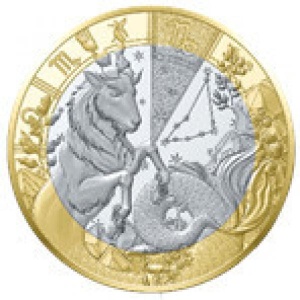
The wheel of the zodiac signs is engraved on the coin's gold-colored crown. One sign stands out from the background because of its larger size and a sandblasted background, different from the smoother one of the others. It is the symbol of Capricorn. Part of the wheel is hidden by crystals, leaves and mushrooms, in reference to the sign's element, earth. A Capricorn, half-goat, half-fish, rears up in the middle of the scene. In the background, there's a starry sky in which the Capricorn constellation is outlined.
Face value: 5 €
Metal: Copper/Nickel
Diameter: 29 mm
Quality: B.U.
Mintage: 25 000
The wheel of the zodiac signs is engraved on the coin's gold-colored crown. One sign stands out from the background because of its larger size and a sandblasted background, different from the smoother one of the others. It is the symbol of Capricorn. Part of the wheel is hidden by crystals, leaves and mushrooms, in reference to the sign's element, earth. A Capricorn, half-goat, half-fish, rears up in the middle of the scene. In the background, there's a starry sky in which the Capricorn constellation is outlined.
20,00 €
Face value: Samoa 0,25$
Weight: 40gr
Diameter: 40 mm
Mintage: 6666
Proof copper coin with partial gold plating
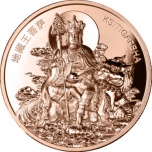
In East Asian Buddhism, the Twelve Heavenly Generals or Twelve Divine Generals are the protective deities.
Weight: 40gr
Diameter: 40 mm
Mintage: 6666
Proof copper coin with partial gold plating
In East Asian Buddhism, the Twelve Heavenly Generals or Twelve Divine Generals are the protective deities.
39,00 €
Face Value: 3 Euro
Quality: B.U,
Diameter: 34 mm
Metal: Copper/nickel
Weight: 16 g
Mintage: 65 000
Comes without packaging
A fleeting being flits through the air, an exquisitely delicate creature. But then it alights for a moment. And allows itself to be admired. – The coin allows you to become closely acquainted with a lovable elf.
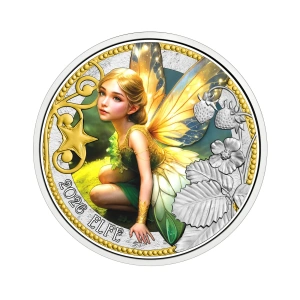
The third coin in the ‘Magical and Mythical Creatures’ series depicts a colourful elf with butterfly wings. – Especially when ultraviolet light sweeps across her, she seems to come alive. – “Elves remind us that there’s more than we see with the naked eye alone. There’s the wood elf, the wind elf, the sun elf, the moon elf – and then there’s your elf.” (Thomas Brezina)
Elven Myths
Depending on which myth and which era we look at, a different image of elves prevails. The terms ‘elf’ and ‘fairy’ are often used interchangeably in everyday language today, but they have different mythological origins.
Elves come from Norse and Celtic mythology. They played an important role in medieval superstition. Elves were also frequently equated or confused with dwarves or demons.
In 19th-century children’s books, a friendlier image of elves began to take hold. It became common to imagine elves as small magical beings that live among flowers and flit about in nature.
In Iceland they are actually invisible. The so-called huldufólk – or the hidden people – are firmly rooted in local folklore. In legends and fairy tales, they populate wild and untouched nature. Nowadays, very few people in Iceland believe in elves in the literal sense. But for the vast majority, they certainly have significance as part of the cultural heritage. Today, a belief in elves primarily expresses appreciation for an ancient storytelling tradition and a close connection with nature. In Icelandic planning approval procedures, one aspect considered alongside others is whether a project would cause damage to cultural heritage. This includes features of the landscape such as large stones or rocks, which are regarded in Icelandic folklore as being inhabited by elves.
Coin motif
A winged elf in a little greenish dress has alighted on the coin. To her right, strawberries together with their blossoms and leaves can be seen in the foreground. To the left, an ornament printed in gold and a star are visible. A band around the edge, also printed in gold, is interrupted in places by the relief. – The colours of the mythical creature and the inscription ‘ELFE’ change in ultraviolet light, enhancing the magical effect of the motif.
The obverse features an intricately decorated key with the letter ‘F’ – ‘F’ as in fairy tale. In the background, a sun is depicted in the style of a silhouette, recessed into a circular relief with a subtle texture. The stars sparkling at the edge and all around, as well as the irregularly shaped letters, create a magical effect.
Quality: B.U,
Diameter: 34 mm
Metal: Copper/nickel
Weight: 16 g
Mintage: 65 000
Comes without packaging
A fleeting being flits through the air, an exquisitely delicate creature. But then it alights for a moment. And allows itself to be admired. – The coin allows you to become closely acquainted with a lovable elf.
The third coin in the ‘Magical and Mythical Creatures’ series depicts a colourful elf with butterfly wings. – Especially when ultraviolet light sweeps across her, she seems to come alive. – “Elves remind us that there’s more than we see with the naked eye alone. There’s the wood elf, the wind elf, the sun elf, the moon elf – and then there’s your elf.” (Thomas Brezina)
Elven Myths
Depending on which myth and which era we look at, a different image of elves prevails. The terms ‘elf’ and ‘fairy’ are often used interchangeably in everyday language today, but they have different mythological origins.
Elves come from Norse and Celtic mythology. They played an important role in medieval superstition. Elves were also frequently equated or confused with dwarves or demons.
In 19th-century children’s books, a friendlier image of elves began to take hold. It became common to imagine elves as small magical beings that live among flowers and flit about in nature.
In Iceland they are actually invisible. The so-called huldufólk – or the hidden people – are firmly rooted in local folklore. In legends and fairy tales, they populate wild and untouched nature. Nowadays, very few people in Iceland believe in elves in the literal sense. But for the vast majority, they certainly have significance as part of the cultural heritage. Today, a belief in elves primarily expresses appreciation for an ancient storytelling tradition and a close connection with nature. In Icelandic planning approval procedures, one aspect considered alongside others is whether a project would cause damage to cultural heritage. This includes features of the landscape such as large stones or rocks, which are regarded in Icelandic folklore as being inhabited by elves.
Coin motif
A winged elf in a little greenish dress has alighted on the coin. To her right, strawberries together with their blossoms and leaves can be seen in the foreground. To the left, an ornament printed in gold and a star are visible. A band around the edge, also printed in gold, is interrupted in places by the relief. – The colours of the mythical creature and the inscription ‘ELFE’ change in ultraviolet light, enhancing the magical effect of the motif.
The obverse features an intricately decorated key with the letter ‘F’ – ‘F’ as in fairy tale. In the background, a sun is depicted in the style of a silhouette, recessed into a circular relief with a subtle texture. The stars sparkling at the edge and all around, as well as the irregularly shaped letters, create a magical effect.
39,00 €