


Easter Coin 2024. Getting There - 5 € 2023 copper coin, 8,5 g
Price:
19,00 €
Quality: Special Uncirculated
Face Value: 5 Euro
Diameter: 28,5 mm
Copper: 99,9%
Total Weight: 8,5 g
Mintage: 50 000
Comes without packaging
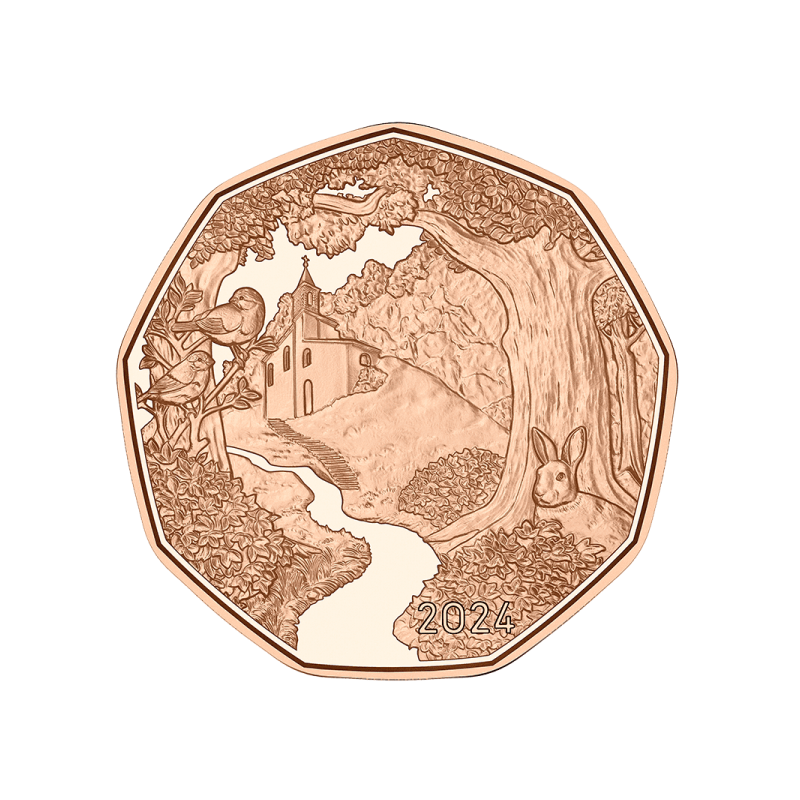
Leave winter behind you with the help of our inspiring spring coin, Getting There. As you walk towards the sun, you become more receptive to the beauty of nature and with each step you get closer to yourself. Walking is so good for us, so why not encourage a friend or loved one to take to the trail with the gift of this great little companion piece and talisman. A gift from the heart, it will give motivate them to set off on a spring stroll for the soul – and if they have lost their bearings, it can help them find their way back. But where does the path lead us? Will it take us even deeper into the forest? Or will it lead us out of it? What lies over the the next ridge? Will the path lead us up the mountain before guiding us safely down into the valley below? The path meanders this way and that, up and down, as if it does not know where it is going itself. It does this out of pure modesty, out of respect for nature and out of cautiousness. It is gentle with those who walk it, too. It draws us forwards, both taking its time and giving us time by inviting us to dawdle, to pause and to marvel. It shows us the world and its big little secrets. The meaning of walking is not only measured by where it leads us. The very act of walking is meaningful in itself, it energises body and mind, and gives direction to the lost and confused. Walking changes those who walk. It helps us see that the path of life is not something irrevocable but part of an ongoing process, a kind of pilgrimage to happiness and contentment. We may not always know exactly where it is taking us, but it gets us there in the end. The path on the coin’s reverse winds its way up to the picturesque Falkenstein church, which is built into the rock in woodland near St Wolfgang in the Salzkammergut region of central Austria. The coats of arms of the nine federal provinces of Austria feature on the coin’s obverse and give the coin its nine-sided shape. Getting There is available in both copper and silver.
Face Value: 5 Euro
Diameter: 28,5 mm
Copper: 99,9%
Total Weight: 8,5 g
Mintage: 50 000
Comes without packaging
Leave winter behind you with the help of our inspiring spring coin, Getting There. As you walk towards the sun, you become more receptive to the beauty of nature and with each step you get closer to yourself. Walking is so good for us, so why not encourage a friend or loved one to take to the trail with the gift of this great little companion piece and talisman. A gift from the heart, it will give motivate them to set off on a spring stroll for the soul – and if they have lost their bearings, it can help them find their way back. But where does the path lead us? Will it take us even deeper into the forest? Or will it lead us out of it? What lies over the the next ridge? Will the path lead us up the mountain before guiding us safely down into the valley below? The path meanders this way and that, up and down, as if it does not know where it is going itself. It does this out of pure modesty, out of respect for nature and out of cautiousness. It is gentle with those who walk it, too. It draws us forwards, both taking its time and giving us time by inviting us to dawdle, to pause and to marvel. It shows us the world and its big little secrets. The meaning of walking is not only measured by where it leads us. The very act of walking is meaningful in itself, it energises body and mind, and gives direction to the lost and confused. Walking changes those who walk. It helps us see that the path of life is not something irrevocable but part of an ongoing process, a kind of pilgrimage to happiness and contentment. We may not always know exactly where it is taking us, but it gets us there in the end. The path on the coin’s reverse winds its way up to the picturesque Falkenstein church, which is built into the rock in woodland near St Wolfgang in the Salzkammergut region of central Austria. The coats of arms of the nine federal provinces of Austria feature on the coin’s obverse and give the coin its nine-sided shape. Getting There is available in both copper and silver.
Sarnased tooted
Quality: Uncirculated
Face Value: 5 Euro
Diameter: 28,5 mm
Material: Copper
Total Weight: 8,9 g
Mintage: 200 000
A coin the likes of which Austria has never seen before, Democracy is made from copper from the former roof of the Parliament building in Vienna. When you purchase the coin you therefore acquire a little piece of democracy and by spending 5 euros you get something priceless in return.
On the occasion of the reopening of the Parliament building in Vienna, we are issuing this very special coin. The copper it contains originally formed part of the former roof of the building but was removed during the ongoing renovation of the building. By using it to make the copper edition of the Democracy coin, we are making our democratic tradition something tangible. A strong democracy thrives on discourse. Our opinions may differ, but our consensus is democracy. Likewise, fundamental rights and freedoms make a democracy what it is. They enable individual and social freedom and guarantee the co-determination of the individual.
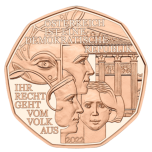
The coin’s reverse features two heads in profile and one full face, which represent the people as sovereign. To the left, we see a watchful eye surrounded by stylised laurel leaves, to the right, we see a section of the Austrian Parliament building in the background. But much more than this, the coin illustrates the spirit from which our nation was born. This is reflected in the Austrian Constitution, where it says: "Austria is a democratic republic. Its law emanates from the people." These wise words appear on the top and bottom edges of the coin.
Face Value: 5 Euro
Diameter: 28,5 mm
Material: Copper
Total Weight: 8,9 g
Mintage: 200 000
A coin the likes of which Austria has never seen before, Democracy is made from copper from the former roof of the Parliament building in Vienna. When you purchase the coin you therefore acquire a little piece of democracy and by spending 5 euros you get something priceless in return.
On the occasion of the reopening of the Parliament building in Vienna, we are issuing this very special coin. The copper it contains originally formed part of the former roof of the building but was removed during the ongoing renovation of the building. By using it to make the copper edition of the Democracy coin, we are making our democratic tradition something tangible. A strong democracy thrives on discourse. Our opinions may differ, but our consensus is democracy. Likewise, fundamental rights and freedoms make a democracy what it is. They enable individual and social freedom and guarantee the co-determination of the individual.
The coin’s reverse features two heads in profile and one full face, which represent the people as sovereign. To the left, we see a watchful eye surrounded by stylised laurel leaves, to the right, we see a section of the Austrian Parliament building in the background. But much more than this, the coin illustrates the spirit from which our nation was born. This is reflected in the Austrian Constitution, where it says: "Austria is a democratic republic. Its law emanates from the people." These wise words appear on the top and bottom edges of the coin.
15,00 €
Quality: Special Uncirculated
Face Value: 5 Euro
Diameter: 28,5 mm
Copper: 99,9%
Total Weight: 8,5 g
Mintage: 50 000
Comes without packaging
Why talk when you can dance instead? That’s how bees communicate. Their ‘waggle dance’ is a wonderful phenomenon and one that not only bees themselves benefit from. Other living creatures, including humans, do so too, because bees are a vital part of our ecosystem: their welfare is our welfare.
In the early 20th century, the unusual behaviour of honeybees piqued the curiosity of behavioural scientist Karl von Frisch (1886–1982), who grew up in Vienna. He was intrigued by the way the insects sometimes move in circles and perform a figure of-eight ‘waggle dance’. In time, von Frisch discovered that when doing so, bees are in fact ‘speaking’ a dance language to the other members of their hive to show them where they can find pollen and nectar. Although originally disputed by other scientists, von Frisch’s theory eventually earned him the Nobel Prize in 1973.
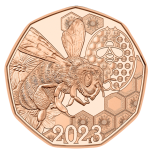
The ‘round dance’, in which bees walks in a circle, turn around, then walk the same circle in the opposite direction, tells watching bees that there are flowers with pollen in the immediate vicinity of the hive. When the food source is further away, the waggle dance tells the watching bees how far it is and in which direction they can find it. A representation of the waggle dance is shown in the background on the coin’s reverse, behind a bee in flight and above a decorative honeycomb deign. The obverse of the nine-sided coin shows the coats of arms of all the provinces of Austria. Not just for nature lovers, whether in copper or silver, Waggle Dance makes for a great spring or Easter gift.
In the early 20th century, the unusual behavior of honey bees piqued the curiosity of behavioral scientist Karl von Frisch (1886–1982), who grew up in Vienna. He was intrigued by the way the insects sometimes move in circles and perform a figure-of-eight ‘waggle dance’. In time, von Frisch discovered that when doing so, bees are in fact ‘speaking’ a dance language to the other members of their hive to show them where they can find pollen and nectar. Although originally disputed by other scientists, von Frisch’s theory eventually earned him the Nobel Prize in 1973 for achievements in comparative behavioural physiology and pioneering work in communication between insects. It is not just bees themselves that benefit from this wonderful phenomenon, as other living creatures, including humans, do so too. Honey bees, wild bees and bumble bees are a vital part of the ecosystem: their welfare is our welfare.
Face Value: 5 Euro
Diameter: 28,5 mm
Copper: 99,9%
Total Weight: 8,5 g
Mintage: 50 000
Comes without packaging
Why talk when you can dance instead? That’s how bees communicate. Their ‘waggle dance’ is a wonderful phenomenon and one that not only bees themselves benefit from. Other living creatures, including humans, do so too, because bees are a vital part of our ecosystem: their welfare is our welfare.
In the early 20th century, the unusual behaviour of honeybees piqued the curiosity of behavioural scientist Karl von Frisch (1886–1982), who grew up in Vienna. He was intrigued by the way the insects sometimes move in circles and perform a figure of-eight ‘waggle dance’. In time, von Frisch discovered that when doing so, bees are in fact ‘speaking’ a dance language to the other members of their hive to show them where they can find pollen and nectar. Although originally disputed by other scientists, von Frisch’s theory eventually earned him the Nobel Prize in 1973.
The ‘round dance’, in which bees walks in a circle, turn around, then walk the same circle in the opposite direction, tells watching bees that there are flowers with pollen in the immediate vicinity of the hive. When the food source is further away, the waggle dance tells the watching bees how far it is and in which direction they can find it. A representation of the waggle dance is shown in the background on the coin’s reverse, behind a bee in flight and above a decorative honeycomb deign. The obverse of the nine-sided coin shows the coats of arms of all the provinces of Austria. Not just for nature lovers, whether in copper or silver, Waggle Dance makes for a great spring or Easter gift.
In the early 20th century, the unusual behavior of honey bees piqued the curiosity of behavioral scientist Karl von Frisch (1886–1982), who grew up in Vienna. He was intrigued by the way the insects sometimes move in circles and perform a figure-of-eight ‘waggle dance’. In time, von Frisch discovered that when doing so, bees are in fact ‘speaking’ a dance language to the other members of their hive to show them where they can find pollen and nectar. Although originally disputed by other scientists, von Frisch’s theory eventually earned him the Nobel Prize in 1973 for achievements in comparative behavioural physiology and pioneering work in communication between insects. It is not just bees themselves that benefit from this wonderful phenomenon, as other living creatures, including humans, do so too. Honey bees, wild bees and bumble bees are a vital part of the ecosystem: their welfare is our welfare.
19,00 €
Quality: Special Uncirculated
Face Value: 5 Euro
Diameter: 28,5 mm
Copper: 99,9%
Total Weight: 8,5 g
Comes without packaging
The New Year Coin 2024 is a special coin for a very special year. With 366 days instead of the usual 365, 2024 is a leap year and this limited-mintage coin is designed to remind you that the extra day should be enjoyed amid the hustle and bustle of everyday life.
The extra day in a leap year keeps the calendar year synchronised with the solar year and thus with the cosmic order. You should accept it as a heavenly gift and treat it as an extra portion of luck. The extra day is a day with great potential on which you can allow yourself a little more ‘me time’, dedicate more time than usual to someone else, or do something you have always wanted to do. Or if you have resolved to tackle something completely new by the end of the year, why not use the extra day for that? Everyday life tends to demand a great deal from us without making any concessions, but that is not the case in 2024 when we are given a whole extra day to enjoy.
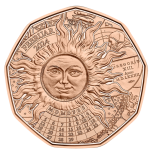
The reverse of the nine-sided coin is dedicated to the Gregorian calendar, which was introduced by Pope Gregory XIII in 1582 to bring the calendar back into line with the solar year. Pope Gregory XIII features on the right edge of the coin next to a large, flame-haired human manifestation of the Sun. Below the Sun is the calendar page for the month of February showing the 29th of February – the extra day. At the top is the zodiac sign Pisces, which corresponds to late February. The coin’s obverse shows the coats of arms of the nine provinces of Austria.
Face Value: 5 Euro
Diameter: 28,5 mm
Copper: 99,9%
Total Weight: 8,5 g
Comes without packaging
The New Year Coin 2024 is a special coin for a very special year. With 366 days instead of the usual 365, 2024 is a leap year and this limited-mintage coin is designed to remind you that the extra day should be enjoyed amid the hustle and bustle of everyday life.
The extra day in a leap year keeps the calendar year synchronised with the solar year and thus with the cosmic order. You should accept it as a heavenly gift and treat it as an extra portion of luck. The extra day is a day with great potential on which you can allow yourself a little more ‘me time’, dedicate more time than usual to someone else, or do something you have always wanted to do. Or if you have resolved to tackle something completely new by the end of the year, why not use the extra day for that? Everyday life tends to demand a great deal from us without making any concessions, but that is not the case in 2024 when we are given a whole extra day to enjoy.
The reverse of the nine-sided coin is dedicated to the Gregorian calendar, which was introduced by Pope Gregory XIII in 1582 to bring the calendar back into line with the solar year. Pope Gregory XIII features on the right edge of the coin next to a large, flame-haired human manifestation of the Sun. Below the Sun is the calendar page for the month of February showing the 29th of February – the extra day. At the top is the zodiac sign Pisces, which corresponds to late February. The coin’s obverse shows the coats of arms of the nine provinces of Austria.
15,00 €
Quality: Special Uncirculated
Face Value: 5 Euro
Diameter: 28,5 mm
Copper: 99,9%
Total Weight: 8,5 g
Comes without packaging
Few animals have had a bigger impact on humans than the horse. Its power, beauty and sensitivity make the horse one of the most beloved members of the animal kingdom, not least among young female riders, many of whom form a profound and enduring bond with their loyal steed. The Easter Coin 2020 celebrates this unique bond.
From being the subject of countless prehistoric cave paintings, to the leading form of human transport for more than five millennia, the horse has played an unparalleled role in the development of society. The most iconic of all European horse breeds is the Lipizzaner, made world famous through its connection with the Spanish Riding School in Vienna. Originally from Slovenia, the Lipizzaner has been bred since 1920 at the stud farm at Piber in the Austrian province of Styria, where some 40 foals come into the world every year. Within minutes of their birth, new born foals can stand and, though initially unsteady, are soon galloping joyfully across the alpine meadows.
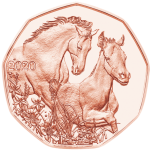
The coin features a foal in the foreground frolicking happily through a meadow while its mother keeps a watchful eye close behind. The lower part of the coin is decorated with an assortment of spring flowers.
Face Value: 5 Euro
Diameter: 28,5 mm
Copper: 99,9%
Total Weight: 8,5 g
Comes without packaging
Few animals have had a bigger impact on humans than the horse. Its power, beauty and sensitivity make the horse one of the most beloved members of the animal kingdom, not least among young female riders, many of whom form a profound and enduring bond with their loyal steed. The Easter Coin 2020 celebrates this unique bond.
From being the subject of countless prehistoric cave paintings, to the leading form of human transport for more than five millennia, the horse has played an unparalleled role in the development of society. The most iconic of all European horse breeds is the Lipizzaner, made world famous through its connection with the Spanish Riding School in Vienna. Originally from Slovenia, the Lipizzaner has been bred since 1920 at the stud farm at Piber in the Austrian province of Styria, where some 40 foals come into the world every year. Within minutes of their birth, new born foals can stand and, though initially unsteady, are soon galloping joyfully across the alpine meadows.
The coin features a foal in the foreground frolicking happily through a meadow while its mother keeps a watchful eye close behind. The lower part of the coin is decorated with an assortment of spring flowers.
15,00 €
Similar products
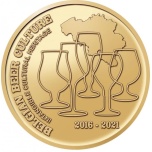
The 2.5 euro coin is minted in BU-quality and is issued in two language versions. On the coincard, a close-up of a beer will quench your thirst. On the coin you will see the Belgian beer culture in a nutshell; each beer has its own matching type of glass!
Details
• Official issue to commemorate 5 years of Belgian beer culture
• Thirst quenching packaging in two language versions
• Limited mintage of max. 20,000 coins
• Legal tender in Belgium, not for circulation
Specifications
• Metal: Brass
• Weight: 10.50 g
• Diameter: 25.65 mm
• Quality: Brilliant Uncirculated (BU) / FDC
• Design: Iris Bruijns (obverse), Luc Luycx (reverse)
• Max. mintage: 20,000 coins worldwide (distributed in 2 language versions in a coincard and 7,500 coins are included in the annual FDC set 2021)
Details
• Official issue to commemorate 5 years of Belgian beer culture
• Thirst quenching packaging in two language versions
• Limited mintage of max. 20,000 coins
• Legal tender in Belgium, not for circulation
Specifications
• Metal: Brass
• Weight: 10.50 g
• Diameter: 25.65 mm
• Quality: Brilliant Uncirculated (BU) / FDC
• Design: Iris Bruijns (obverse), Luc Luycx (reverse)
• Max. mintage: 20,000 coins worldwide (distributed in 2 language versions in a coincard and 7,500 coins are included in the annual FDC set 2021)
19,00 €
Issuing Country: France
Face value: 5 €
Metal: Copper/Nickel
Diameter: 29 mm
Quality: B.U.
Mintage: 25 000
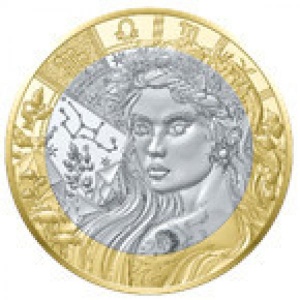
The wheel of the zodiac signs is engraved on the coin's gold-colored crown. One sign stands out from the background because it is larger than the others and has a sandblasted background, different from the smoother one of the others. It is the symbol of the Virgo. The main feature of the engraving is the bust of a woman whose long hair is topped with a crown of flowers. She is gazing over her shoulder with an air of mystery. Around her, a backdrop of leaves, mushrooms and crystals recalls the element of the sign, earth. In the background, a starry sky features the constellation of Virgo
Face value: 5 €
Metal: Copper/Nickel
Diameter: 29 mm
Quality: B.U.
Mintage: 25 000
The wheel of the zodiac signs is engraved on the coin's gold-colored crown. One sign stands out from the background because it is larger than the others and has a sandblasted background, different from the smoother one of the others. It is the symbol of the Virgo. The main feature of the engraving is the bust of a woman whose long hair is topped with a crown of flowers. She is gazing over her shoulder with an air of mystery. Around her, a backdrop of leaves, mushrooms and crystals recalls the element of the sign, earth. In the background, a starry sky features the constellation of Virgo
20,00 €
Issuing Country: France
Face value: 5 €
Metal: Copper/Nickel
Diameter: 29 mm
Quality: B.U.
Mintage: 25 000
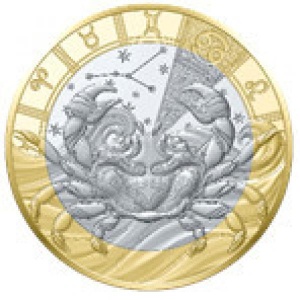
The wheel of the zodiac signs is engraved on the coin's gold-colored crown. One sign stands out from the background because it is larger than the others and has a sandblasted background, different from the smoother one of the others. This is the Cancer symbol. The lower part of the wheel is drowned in a wave, in reference to water, the element of this sign. A crab, its entire body decorated with ornamental lines, spreads out its limbs in the center of the design. The background features a starry sky in which the constellation Cancer is outlined.
Face value: 5 €
Metal: Copper/Nickel
Diameter: 29 mm
Quality: B.U.
Mintage: 25 000
The wheel of the zodiac signs is engraved on the coin's gold-colored crown. One sign stands out from the background because it is larger than the others and has a sandblasted background, different from the smoother one of the others. This is the Cancer symbol. The lower part of the wheel is drowned in a wave, in reference to water, the element of this sign. A crab, its entire body decorated with ornamental lines, spreads out its limbs in the center of the design. The background features a starry sky in which the constellation Cancer is outlined.
20,00 €
Denomination: 1/4 €
Alloy: Common metal
Weight: 15,8 g
Diameter: 34 mm
Quality BU
Year: 2025
Notre-Dame Cathedral in Paris is a Gothic cathedral in the heart of the French capital, on the Île de la Cité. Built in the 12th century, its stained glass windows, gargoyles and flying buttresses have inspired many literary works such as Victor Hugo's novel. In April 2019, a violent fire ravaged a significant part of its structure, including its spire and roof. Restoration work then quickly began, in order to rebuild the monument identically.
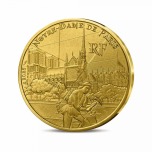
On the front, in the foreground, a stonemason from the medieval period symbolizing the craftsmen who built the cathedral. In the background, the left part of the cathedral in detailed view and the right part, as well as the spire, in schematic outline of the structure to evoke its construction/reconstruction.
The reverse is common to all coins in the UNESCO series of this year 2025. It represents the terrestrial globe with the parallels and meridians on the left side and the inscriptions of major sites classified as UNESCO World Heritage on the right side. These inscriptions are as if engraved in stone, which echoes the Rosetta Stone. The left side of the globe is surrounded by the UNESCO logo as well as the marking "World Heritage". The face value is inscribed on the left side of the globe, blending perfectly with the parallels and meridians.
Alloy: Common metal
Weight: 15,8 g
Diameter: 34 mm
Quality BU
Year: 2025
Notre-Dame Cathedral in Paris is a Gothic cathedral in the heart of the French capital, on the Île de la Cité. Built in the 12th century, its stained glass windows, gargoyles and flying buttresses have inspired many literary works such as Victor Hugo's novel. In April 2019, a violent fire ravaged a significant part of its structure, including its spire and roof. Restoration work then quickly began, in order to rebuild the monument identically.
On the front, in the foreground, a stonemason from the medieval period symbolizing the craftsmen who built the cathedral. In the background, the left part of the cathedral in detailed view and the right part, as well as the spire, in schematic outline of the structure to evoke its construction/reconstruction.
The reverse is common to all coins in the UNESCO series of this year 2025. It represents the terrestrial globe with the parallels and meridians on the left side and the inscriptions of major sites classified as UNESCO World Heritage on the right side. These inscriptions are as if engraved in stone, which echoes the Rosetta Stone. The left side of the globe is surrounded by the UNESCO logo as well as the marking "World Heritage". The face value is inscribed on the left side of the globe, blending perfectly with the parallels and meridians.
15,00 €
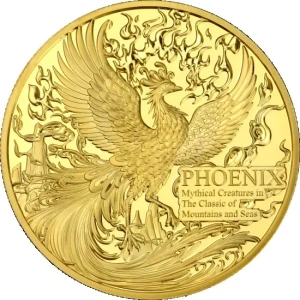
Country of legal tender: Samoa
Face value: 0,2 Tala
Metal: Copper/Nickel
Weight: 24 g
Maximum Mintage: 5000
Year Dated: 2026
The Classic of Mountains and Seas is an ancient Chinese book from the pre-Qin period, rich in myths, legends, and geographical knowledge. It records mountains, rivers, ethnic groups, medicines, and famous stories such as Kuafu chasing the sun and Jingwei filling the sea. The book also describes many mysterious mythical creatures that reflect ancient people’s imagination and understanding of the world. One passage tells of a phoenix-like bird with five-colored markings symbolizing virtue, righteousness, etiquette, benevolence, and integrity. Its appearance is said to bring peace and harmony to the world.
Face value: 0,2 Tala
Metal: Copper/Nickel
Weight: 24 g
Maximum Mintage: 5000
Year Dated: 2026
The Classic of Mountains and Seas is an ancient Chinese book from the pre-Qin period, rich in myths, legends, and geographical knowledge. It records mountains, rivers, ethnic groups, medicines, and famous stories such as Kuafu chasing the sun and Jingwei filling the sea. The book also describes many mysterious mythical creatures that reflect ancient people’s imagination and understanding of the world. One passage tells of a phoenix-like bird with five-colored markings symbolizing virtue, righteousness, etiquette, benevolence, and integrity. Its appearance is said to bring peace and harmony to the world.
35,00 €