

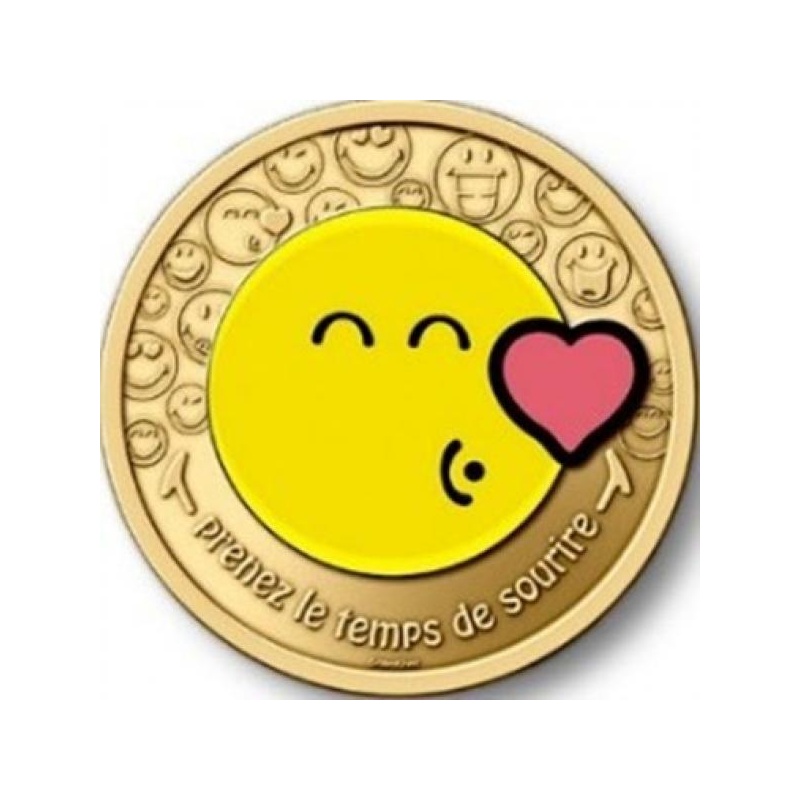
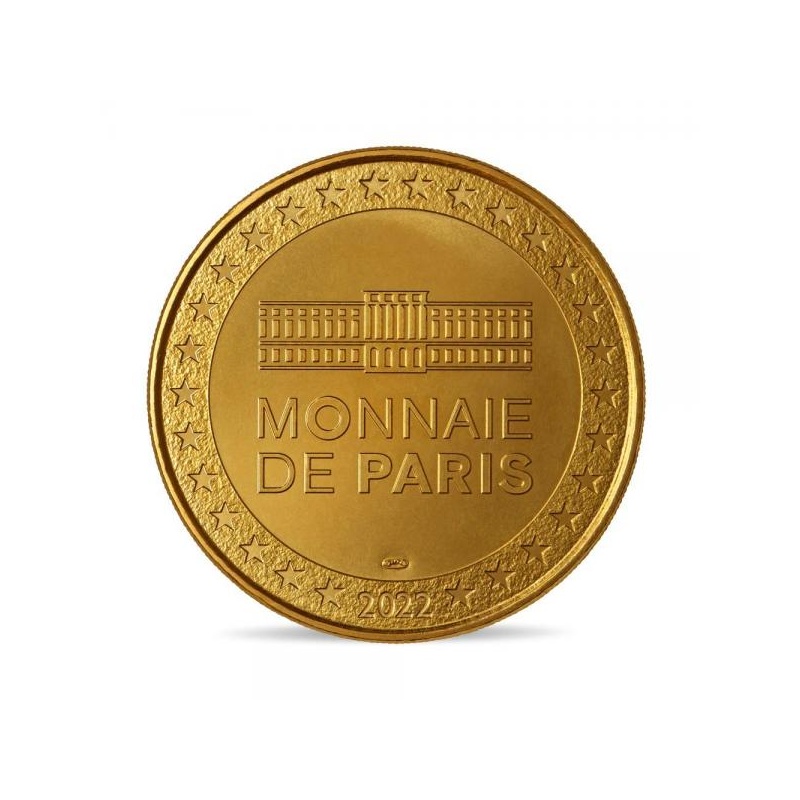
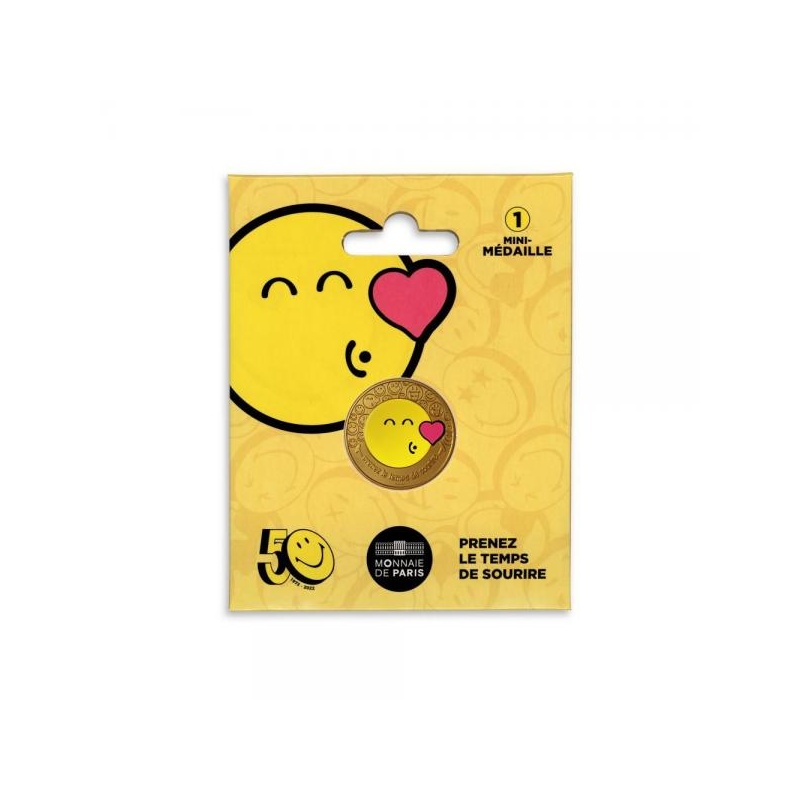
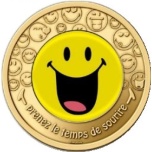
Smiley mini - medal. Gratitute
Price:
9,90 €
Metal: NordicGold
Weight: 15,80 g
Diameter: 34 mm
Mintage: 10 000
In 2022, Smiley celebrates its fifth decade of smiles and optimism.
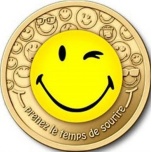
The emblematic yellow, round face of the brand was born on 1st, January 1972 in France, when journalist Franklin Loufrani used this infectious smile in the newspaper France-soir in order to highlight stories which brought positive news and cheered up French people’s spirit. This operation, called « Take the time to smile » was an immediate success.
In 1996, the logo is relaunched and developed in other forms : a new 3D version is created and new expressions are added in. Nowadays, from the smiley to the emoticon, smiling takes multiple forms, becoming a representative of cheerfulness !
Since the creation of the yellow smile in 1972, Smiley diversified the range of its expressions, conveying over a hundred émotions. From the smiley to the emoticon, smiling takes multiple forms.
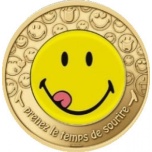
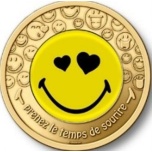
Each mini-medal highlights a particular emotion : love, gratitude, gluttony, joy and laughing.
The medals are packaged in a coloured packaging, to treat to someone or to yourself.
Weight: 15,80 g
Diameter: 34 mm
Mintage: 10 000
In 2022, Smiley celebrates its fifth decade of smiles and optimism.
The emblematic yellow, round face of the brand was born on 1st, January 1972 in France, when journalist Franklin Loufrani used this infectious smile in the newspaper France-soir in order to highlight stories which brought positive news and cheered up French people’s spirit. This operation, called « Take the time to smile » was an immediate success.
In 1996, the logo is relaunched and developed in other forms : a new 3D version is created and new expressions are added in. Nowadays, from the smiley to the emoticon, smiling takes multiple forms, becoming a representative of cheerfulness !
Since the creation of the yellow smile in 1972, Smiley diversified the range of its expressions, conveying over a hundred émotions. From the smiley to the emoticon, smiling takes multiple forms.
Each mini-medal highlights a particular emotion : love, gratitude, gluttony, joy and laughing.
The medals are packaged in a coloured packaging, to treat to someone or to yourself.
Kollektsioon
Metal: NordicGold
Weight: 15,80 g
Diameter: 34 mm
Mintage: 10 000
In 2022, Smiley celebrates its fifth decade of smiles and optimism.
The emblematic yellow, round face of the brand was born on 1st, January 1972 in France, when journalist Franklin Loufrani used this infectious smile in the newspaper France-soir in order to highlight stories which brought positive news and cheered up French people’s spirit. This operation, called « Take the time to smile » was an immediate success.
In 1996, the logo is relaunched and developed in other forms : a new 3D version is created and new expressions are added in. Nowadays, from the smiley to the emoticon, smiling takes multiple forms, becoming a representative of cheerfulness !
Since the creation of the yellow smile in 1972, Smiley diversified the range of its expressions, conveying over a hundred émotions. From the smiley to the emoticon, smiling takes multiple forms.
Each mini-medal highlights a particular emotion : love, gratitude, gluttony, joy and laughing.
The medals are packaged in a coloured packaging, to treat to someone or to yourself.
Weight: 15,80 g
Diameter: 34 mm
Mintage: 10 000
In 2022, Smiley celebrates its fifth decade of smiles and optimism.
The emblematic yellow, round face of the brand was born on 1st, January 1972 in France, when journalist Franklin Loufrani used this infectious smile in the newspaper France-soir in order to highlight stories which brought positive news and cheered up French people’s spirit. This operation, called « Take the time to smile » was an immediate success.
In 1996, the logo is relaunched and developed in other forms : a new 3D version is created and new expressions are added in. Nowadays, from the smiley to the emoticon, smiling takes multiple forms, becoming a representative of cheerfulness !
Since the creation of the yellow smile in 1972, Smiley diversified the range of its expressions, conveying over a hundred émotions. From the smiley to the emoticon, smiling takes multiple forms.
Each mini-medal highlights a particular emotion : love, gratitude, gluttony, joy and laughing.
The medals are packaged in a coloured packaging, to treat to someone or to yourself.
9,90 €
Metal: NordicGold
Weight: 15,80 g
Diameter: 34 mm
Mintage: 10 000
In 2022, Smiley celebrates its fifth decade of smiles and optimism.
The emblematic yellow, round face of the brand was born on 1st, January 1972 in France, when journalist Franklin Loufrani used this infectious smile in the newspaper France-soir in order to highlight stories which brought positive news and cheered up French people’s spirit. This operation, called « Take the time to smile » was an immediate success.
In 1996, the logo is relaunched and developed in other forms : a new 3D version is created and new expressions are added in. Nowadays, from the smiley to the emoticon, smiling takes multiple forms, becoming a representative of cheerfulness !
Since the creation of the yellow smile in 1972, Smiley diversified the range of its expressions, conveying over a hundred émotions. From the smiley to the emoticon, smiling takes multiple forms.
Each mini-medal highlights a particular emotion : love, gratitude, gluttony, joy and laughing.
The medals are packaged in a coloured packaging, to treat to someone or to yourself.
Weight: 15,80 g
Diameter: 34 mm
Mintage: 10 000
In 2022, Smiley celebrates its fifth decade of smiles and optimism.
The emblematic yellow, round face of the brand was born on 1st, January 1972 in France, when journalist Franklin Loufrani used this infectious smile in the newspaper France-soir in order to highlight stories which brought positive news and cheered up French people’s spirit. This operation, called « Take the time to smile » was an immediate success.
In 1996, the logo is relaunched and developed in other forms : a new 3D version is created and new expressions are added in. Nowadays, from the smiley to the emoticon, smiling takes multiple forms, becoming a representative of cheerfulness !
Since the creation of the yellow smile in 1972, Smiley diversified the range of its expressions, conveying over a hundred émotions. From the smiley to the emoticon, smiling takes multiple forms.
Each mini-medal highlights a particular emotion : love, gratitude, gluttony, joy and laughing.
The medals are packaged in a coloured packaging, to treat to someone or to yourself.
9,90 €
Metal: NordicGold
Weight: 15,80 g
Diameter: 34 mm
Mintage: 10 000
In 2022, Smiley celebrates its fifth decade of smiles and optimism.
The emblematic yellow, round face of the brand was born on 1st, January 1972 in France, when journalist Franklin Loufrani used this infectious smile in the newspaper France-soir in order to highlight stories which brought positive news and cheered up French people’s spirit. This operation, called « Take the time to smile » was an immediate success.
In 1996, the logo is relaunched and developed in other forms : a new 3D version is created and new expressions are added in. Nowadays, from the smiley to the emoticon, smiling takes multiple forms, becoming a representative of cheerfulness !
Since the creation of the yellow smile in 1972, Smiley diversified the range of its expressions, conveying over a hundred émotions. From the smiley to the emoticon, smiling takes multiple forms.
Each mini-medal highlights a particular emotion : love, gratitude, gluttony, joy and laughing.
The medals are packaged in a coloured packaging, to treat to someone or to yourself.
Weight: 15,80 g
Diameter: 34 mm
Mintage: 10 000
In 2022, Smiley celebrates its fifth decade of smiles and optimism.
The emblematic yellow, round face of the brand was born on 1st, January 1972 in France, when journalist Franklin Loufrani used this infectious smile in the newspaper France-soir in order to highlight stories which brought positive news and cheered up French people’s spirit. This operation, called « Take the time to smile » was an immediate success.
In 1996, the logo is relaunched and developed in other forms : a new 3D version is created and new expressions are added in. Nowadays, from the smiley to the emoticon, smiling takes multiple forms, becoming a representative of cheerfulness !
Since the creation of the yellow smile in 1972, Smiley diversified the range of its expressions, conveying over a hundred émotions. From the smiley to the emoticon, smiling takes multiple forms.
Each mini-medal highlights a particular emotion : love, gratitude, gluttony, joy and laughing.
The medals are packaged in a coloured packaging, to treat to someone or to yourself.
9,90 €
Metal: NordicGold
Weight: 15,80 g
Diameter: 34 mm
Mintage: 10 000
In 2022, Smiley celebrates its fifth decade of smiles and optimism.
The emblematic yellow, round face of the brand was born on 1st, January 1972 in France, when journalist Franklin Loufrani used this infectious smile in the newspaper France-soir in order to highlight stories which brought positive news and cheered up French people’s spirit. This operation, called « Take the time to smile » was an immediate success.
In 1996, the logo is relaunched and developed in other forms : a new 3D version is created and new expressions are added in. Nowadays, from the smiley to the emoticon, smiling takes multiple forms, becoming a representative of cheerfulness !
Since the creation of the yellow smile in 1972, Smiley diversified the range of its expressions, conveying over a hundred émotions. From the smiley to the emoticon, smiling takes multiple forms.
Each mini-medal highlights a particular emotion : love, gratitude, gluttony, joy and laughing.
The medals are packaged in a coloured packaging, to treat to someone or to yourself.
Weight: 15,80 g
Diameter: 34 mm
Mintage: 10 000
In 2022, Smiley celebrates its fifth decade of smiles and optimism.
The emblematic yellow, round face of the brand was born on 1st, January 1972 in France, when journalist Franklin Loufrani used this infectious smile in the newspaper France-soir in order to highlight stories which brought positive news and cheered up French people’s spirit. This operation, called « Take the time to smile » was an immediate success.
In 1996, the logo is relaunched and developed in other forms : a new 3D version is created and new expressions are added in. Nowadays, from the smiley to the emoticon, smiling takes multiple forms, becoming a representative of cheerfulness !
Since the creation of the yellow smile in 1972, Smiley diversified the range of its expressions, conveying over a hundred émotions. From the smiley to the emoticon, smiling takes multiple forms.
Each mini-medal highlights a particular emotion : love, gratitude, gluttony, joy and laughing.
The medals are packaged in a coloured packaging, to treat to someone or to yourself.
9,90 €
Similar products
Denomination: 5£
Alloy: Cupro-nickel
Weight: 28.28 g
Diameter: 38,6 mm
Quality Brilliant Uncirculated
Year: 2025
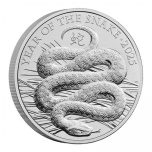
On 29 January 2025, the Chinese New Year ushers in the Year of the Snake. A joyful time marked by communities worldwide, friends and family will gather to enjoy traditional food, watch firework displays and gift children money in red envelopes. Each year is characterised by one of 12 zodiac animals, and 2025 sees the snake in the ascendancy. Many regard the Year of the Snake as the year of strength. Clever and determined, individuals born under this sign are often known for their adaptability, intelligence and agility, can sometimes make advanced judgments that inform their goals, and frequently possess a mature outlook on life.
Alloy: Cupro-nickel
Weight: 28.28 g
Diameter: 38,6 mm
Quality Brilliant Uncirculated
Year: 2025
On 29 January 2025, the Chinese New Year ushers in the Year of the Snake. A joyful time marked by communities worldwide, friends and family will gather to enjoy traditional food, watch firework displays and gift children money in red envelopes. Each year is characterised by one of 12 zodiac animals, and 2025 sees the snake in the ascendancy. Many regard the Year of the Snake as the year of strength. Clever and determined, individuals born under this sign are often known for their adaptability, intelligence and agility, can sometimes make advanced judgments that inform their goals, and frequently possess a mature outlook on life.
25,00 €
Denomination: 1/4 €
Alloy: Common metal
Weight: 15,8 g
Diameter: 34 mm
Quality BU
Year: 2025
Notre-Dame Cathedral in Paris is a Gothic cathedral in the heart of the French capital, on the Île de la Cité. Built in the 12th century, its stained glass windows, gargoyles and flying buttresses have inspired many literary works such as Victor Hugo's novel. In April 2019, a violent fire ravaged a significant part of its structure, including its spire and roof. Restoration work then quickly began, in order to rebuild the monument identically.
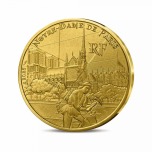
On the front, in the foreground, a stonemason from the medieval period symbolizing the craftsmen who built the cathedral. In the background, the left part of the cathedral in detailed view and the right part, as well as the spire, in schematic outline of the structure to evoke its construction/reconstruction.
The reverse is common to all coins in the UNESCO series of this year 2025. It represents the terrestrial globe with the parallels and meridians on the left side and the inscriptions of major sites classified as UNESCO World Heritage on the right side. These inscriptions are as if engraved in stone, which echoes the Rosetta Stone. The left side of the globe is surrounded by the UNESCO logo as well as the marking "World Heritage". The face value is inscribed on the left side of the globe, blending perfectly with the parallels and meridians.
Alloy: Common metal
Weight: 15,8 g
Diameter: 34 mm
Quality BU
Year: 2025
Notre-Dame Cathedral in Paris is a Gothic cathedral in the heart of the French capital, on the Île de la Cité. Built in the 12th century, its stained glass windows, gargoyles and flying buttresses have inspired many literary works such as Victor Hugo's novel. In April 2019, a violent fire ravaged a significant part of its structure, including its spire and roof. Restoration work then quickly began, in order to rebuild the monument identically.
On the front, in the foreground, a stonemason from the medieval period symbolizing the craftsmen who built the cathedral. In the background, the left part of the cathedral in detailed view and the right part, as well as the spire, in schematic outline of the structure to evoke its construction/reconstruction.
The reverse is common to all coins in the UNESCO series of this year 2025. It represents the terrestrial globe with the parallels and meridians on the left side and the inscriptions of major sites classified as UNESCO World Heritage on the right side. These inscriptions are as if engraved in stone, which echoes the Rosetta Stone. The left side of the globe is surrounded by the UNESCO logo as well as the marking "World Heritage". The face value is inscribed on the left side of the globe, blending perfectly with the parallels and meridians.
15,00 €
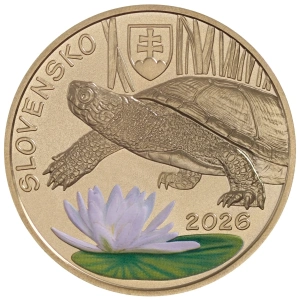
Face value: 5 €
Diameter: 34 mm
Weight: 19.1 g
Metal: Brass
Mintage: 55,000
The European pond turtle (Emys orbicularis) is an aquatic turtle species. Native to Slovakia, the pond turtle was once widespread throughout the south of the country, but today its strongest populations are found in the Eastern Slovak Lowland and the Danubian Lowland. It is a protected reptile species that can live for more than 100 years. The pond turtle inhabits still or slowly flowing waters with muddy bottoms and rich vegetation, such as oxbow lakes, canals, ponds, lakes, and marshes. It is an excellent swimmer and diver and often basks in the sun on banks, tree trunks, or stones. Sandy areas are essential for egg laying. After overwintering, the hatchlings dig their way out and move to the water. Adults hibernate underwater, buried in mud. The pond turtle’s diet consists mainly of aquatic invertebrates, but it also feeds on frogs, tadpoles, fish, algae, and plants. Appropriate measures to support its conservation include the restoration of wetlands and nesting sites in their surroundings, as well as preventing the release of non-native invasive turtle species into the wild.
Obverse:
The obverse depicts a European pond turtle (Emys orbicularis) in its natural habitat. The bottom of the field features a white water lily rendered in colour. Above the turtle is the Slovak coat of arms, and below it, in the lower right, is the year of issuance ‘2026’. The name of the issuing country ‘SLOVENSKO’ is inscribed along the upper left edge.
Reverse:
The reverse design consists of two European pond turtles swimming in water. To their left are the coin’s denomination ‘5’ and currency ‘EURO’, one above the other. The inscription ‘KORYTNAČKA MOČIARNA’, the Slovak name of the European pond turtle, runs along the edge of the field from the upper left to the lower right, while the scientific name ‘EMYS ORBICULARIS’ is inscribed along the lower left edge. On the right side, among the bubbles between the turtles’ heads, are the stylised initials ‘KL’ of the coin’s designer, Karol Ličko, and the mint mark of the Kremnica Mint (Mincovňa Kremnica), consisting of the letters ‘MK’ between two dies.
Diameter: 34 mm
Weight: 19.1 g
Metal: Brass
Mintage: 55,000
The European pond turtle (Emys orbicularis) is an aquatic turtle species. Native to Slovakia, the pond turtle was once widespread throughout the south of the country, but today its strongest populations are found in the Eastern Slovak Lowland and the Danubian Lowland. It is a protected reptile species that can live for more than 100 years. The pond turtle inhabits still or slowly flowing waters with muddy bottoms and rich vegetation, such as oxbow lakes, canals, ponds, lakes, and marshes. It is an excellent swimmer and diver and often basks in the sun on banks, tree trunks, or stones. Sandy areas are essential for egg laying. After overwintering, the hatchlings dig their way out and move to the water. Adults hibernate underwater, buried in mud. The pond turtle’s diet consists mainly of aquatic invertebrates, but it also feeds on frogs, tadpoles, fish, algae, and plants. Appropriate measures to support its conservation include the restoration of wetlands and nesting sites in their surroundings, as well as preventing the release of non-native invasive turtle species into the wild.
Obverse:
The obverse depicts a European pond turtle (Emys orbicularis) in its natural habitat. The bottom of the field features a white water lily rendered in colour. Above the turtle is the Slovak coat of arms, and below it, in the lower right, is the year of issuance ‘2026’. The name of the issuing country ‘SLOVENSKO’ is inscribed along the upper left edge.
Reverse:
The reverse design consists of two European pond turtles swimming in water. To their left are the coin’s denomination ‘5’ and currency ‘EURO’, one above the other. The inscription ‘KORYTNAČKA MOČIARNA’, the Slovak name of the European pond turtle, runs along the edge of the field from the upper left to the lower right, while the scientific name ‘EMYS ORBICULARIS’ is inscribed along the lower left edge. On the right side, among the bubbles between the turtles’ heads, are the stylised initials ‘KL’ of the coin’s designer, Karol Ličko, and the mint mark of the Kremnica Mint (Mincovňa Kremnica), consisting of the letters ‘MK’ between two dies.
19,00 €

In 2026, a series dedicated entirely to Belgium’s native animals will be launched. The first edition will feature the largest species in our country! The Belgian draught horse will kick off the series. The special symbol on the coincard offers a glimpse of the native animals that will be featuredin the coming years.
The Belgian draft horse: strength, elegance and heritage
The Belgian draft horse, also known as the Brabant draught horse, is an imposing breed, admired worldwide for its strength, stamina and calm temperament. Originally bred for heavy agricultural work and pulling loads, including in the coal mines, it stands out for its muscular build, broad chest and strong legs. This breed combines strength with elegance: a noble head, proud bearing and a range of seven colours, of which bay roan still predominates. These characteristics make it popular with farmers, horse lovers and now also coin collectors, thanks to this tribute on the first 2½ euro coin of 2026.
Movement on a gold-coloured coin!
The strength, movement and symbolism of the draft horse inspired the Royal Mint of Belgium to issue a 2½ euro coin. The background of the coin designs shows movement and beautifully captures the draft horse in a rural setting. The coin was created in collaboration with, amongst others, the Royal Society of the Belgian Draft Horse, the Association of Flemish Breeders of the Belgian Draft Horse and immaterieel-erfgoed.be. The 2½ euro coin is minted in BU quality and comes in a coincard with two language versions.
Specifications
• Metal: Brass
• Weight: 10.50 g
• Diameter: 25.65 mm
• Quality: Brilliant Uncirculated (BU) / FDC
• Design: Iris Bruijns
• Max. mintage: 10,000 coins worldwide (distributed in 2 language versions in a coincard)
The Belgian draft horse: strength, elegance and heritage
The Belgian draft horse, also known as the Brabant draught horse, is an imposing breed, admired worldwide for its strength, stamina and calm temperament. Originally bred for heavy agricultural work and pulling loads, including in the coal mines, it stands out for its muscular build, broad chest and strong legs. This breed combines strength with elegance: a noble head, proud bearing and a range of seven colours, of which bay roan still predominates. These characteristics make it popular with farmers, horse lovers and now also coin collectors, thanks to this tribute on the first 2½ euro coin of 2026.
Movement on a gold-coloured coin!
The strength, movement and symbolism of the draft horse inspired the Royal Mint of Belgium to issue a 2½ euro coin. The background of the coin designs shows movement and beautifully captures the draft horse in a rural setting. The coin was created in collaboration with, amongst others, the Royal Society of the Belgian Draft Horse, the Association of Flemish Breeders of the Belgian Draft Horse and immaterieel-erfgoed.be. The 2½ euro coin is minted in BU quality and comes in a coincard with two language versions.
Specifications
• Metal: Brass
• Weight: 10.50 g
• Diameter: 25.65 mm
• Quality: Brilliant Uncirculated (BU) / FDC
• Design: Iris Bruijns
• Max. mintage: 10,000 coins worldwide (distributed in 2 language versions in a coincard)
20,00 €

Face Value: 1$
Diameter:65 mm
Copper: 99,9%
Total Weight: 155,,517 g
Mintage: 999
Comes in box wit certificate
Lady Justice 5oz Copper coin offers a timeless reflection on justice, strength, and resolve. Featuring an exquisitely detailed depiction of Lady Justice, this design blends classical symbolism with modern artistry. Struck in 5 oz copper, the reverse proof finish beautifully showcases every intricate detail, highlighting the depth, texture, and craftsmanship of this powerful representation.
Diameter:65 mm
Copper: 99,9%
Total Weight: 155,,517 g
Mintage: 999
Comes in box wit certificate
Lady Justice 5oz Copper coin offers a timeless reflection on justice, strength, and resolve. Featuring an exquisitely detailed depiction of Lady Justice, this design blends classical symbolism with modern artistry. Struck in 5 oz copper, the reverse proof finish beautifully showcases every intricate detail, highlighting the depth, texture, and craftsmanship of this powerful representation.
99,00 €