




"Milano Cortina 2026 Winter Olympic Games - Cortina Italy 1/4 € base metal coin
Price:
8,00 €
Materiall: CuNi
Weight: 7 g
Diameter: 22,25 mm
Mintage:
An extraordinary collection accompanies the approach to the Olympic and Paralympic Winter Games of Milan Cortina 2026 and celebrates its spirit through its most iconic symbols: the logo of the event, the journey of the flame, the mascot and the winter disciplines associated with the host locations. Each coin in the collection is a tribute to the magic of sport and to Italy.
Obverse: In the centre, the official logo of the Milano Cortina 2026 Winter Olympic Games. Arch-shaped, the inscription “Repubblica Italiana”. In the right field, the “R”, identifying the Mint of Rome and “2025”, the year of the coin’s issue.
Reverse: In the centre, a stylised frontal perspective of the Milan Cathedral. Arch-shaped the inscription “MILANO CORTINA 2026 WINTER OLYMPIC GAMES”; On the left “A.VECCHIO,” signature of the designer Antonio Vecchio; at the bottom centre “1/4 EURO”, coin’s value.
Weight: 7 g
Diameter: 22,25 mm
Mintage:
An extraordinary collection accompanies the approach to the Olympic and Paralympic Winter Games of Milan Cortina 2026 and celebrates its spirit through its most iconic symbols: the logo of the event, the journey of the flame, the mascot and the winter disciplines associated with the host locations. Each coin in the collection is a tribute to the magic of sport and to Italy.
Obverse: In the centre, the official logo of the Milano Cortina 2026 Winter Olympic Games. Arch-shaped, the inscription “Repubblica Italiana”. In the right field, the “R”, identifying the Mint of Rome and “2025”, the year of the coin’s issue.
Reverse: In the centre, a stylised frontal perspective of the Milan Cathedral. Arch-shaped the inscription “MILANO CORTINA 2026 WINTER OLYMPIC GAMES”; On the left “A.VECCHIO,” signature of the designer Antonio Vecchio; at the bottom centre “1/4 EURO”, coin’s value.
Kollektsioon
Materiall: CuNi
Weight: 7 g
Diameter: 22,25 mm
Mintage:
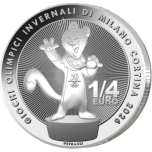
An extraordinary collection accompanies the approach to the Olympic and Paralympic Winter Games of Milan Cortina 2026 and celebrates its spirit through its most iconic symbols: the logo of the event, the journey of the flame, the mascot and the winter disciplines associated with the host locations. Each coin in the collection is a tribute to the magic of sport and to Italy.
Obverse: In the centre, the official logo of the Milano Cortina 2026 Winter Olympic Games. Arch-shaped, the inscription "Repubblica Italiana". In the right field, the "R", identifying the Mint of Rome and "2025", the year of the coin’s issue.
Reverse: In the centre, Tina, official mascot of the Olympic Games, standing on a podium while celebrating the victory of the medal. Arch-shaped, the inscription “GIOCHI OLIMPICI INVERNALI DI MILANO CORTINA 2026”; bottom right “1/4 EURO”, the coin’s value. Below “PETRASSI”, signature of the designer. In the background a sunburst decoration.
Weight: 7 g
Diameter: 22,25 mm
Mintage:
An extraordinary collection accompanies the approach to the Olympic and Paralympic Winter Games of Milan Cortina 2026 and celebrates its spirit through its most iconic symbols: the logo of the event, the journey of the flame, the mascot and the winter disciplines associated with the host locations. Each coin in the collection is a tribute to the magic of sport and to Italy.
Obverse: In the centre, the official logo of the Milano Cortina 2026 Winter Olympic Games. Arch-shaped, the inscription "Repubblica Italiana". In the right field, the "R", identifying the Mint of Rome and "2025", the year of the coin’s issue.
Reverse: In the centre, Tina, official mascot of the Olympic Games, standing on a podium while celebrating the victory of the medal. Arch-shaped, the inscription “GIOCHI OLIMPICI INVERNALI DI MILANO CORTINA 2026”; bottom right “1/4 EURO”, the coin’s value. Below “PETRASSI”, signature of the designer. In the background a sunburst decoration.
8,00 €
Materiall: CuNi
Weight: 7 g
Diameter: 22,25 mm
Mintage:
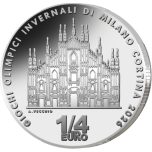
An extraordinary collection accompanies the approach to the Olympic and Paralympic Winter Games of Milan Cortina 2026 and celebrates its spirit through its most iconic symbols: the logo of the event, the journey of the flame, the mascot and the winter disciplines associated with the host locations. Each coin in the collection is a tribute to the magic of sport and to Italy.
Obverse: In the centre, the official logo of the Milano Cortina 2026 Winter Olympic Games. Arch-shaped, the inscription “Repubblica Italiana”. In the right field, the “R”, identifying the Mint of Rome and “2025”, the year of the coin’s issue.
Reverse: In the centre, a stylised frontal perspective of the Milan Cathedral. Arch-shaped the inscription “MILANO CORTINA 2026 WINTER OLYMPIC GAMES”; On the left “A.VECCHIO,” signature of the designer Antonio Vecchio; at the bottom centre “1/4 EURO”, coin’s value.
Weight: 7 g
Diameter: 22,25 mm
Mintage:
An extraordinary collection accompanies the approach to the Olympic and Paralympic Winter Games of Milan Cortina 2026 and celebrates its spirit through its most iconic symbols: the logo of the event, the journey of the flame, the mascot and the winter disciplines associated with the host locations. Each coin in the collection is a tribute to the magic of sport and to Italy.
Obverse: In the centre, the official logo of the Milano Cortina 2026 Winter Olympic Games. Arch-shaped, the inscription “Repubblica Italiana”. In the right field, the “R”, identifying the Mint of Rome and “2025”, the year of the coin’s issue.
Reverse: In the centre, a stylised frontal perspective of the Milan Cathedral. Arch-shaped the inscription “MILANO CORTINA 2026 WINTER OLYMPIC GAMES”; On the left “A.VECCHIO,” signature of the designer Antonio Vecchio; at the bottom centre “1/4 EURO”, coin’s value.
8,00 €
Similar products
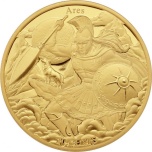
The Twelve Olympians in the Zodiac - Ares & Scorpio Samoa 0.20 $ 2021 Gold plated Copper/Nickel coin
Face value: 0.2 $
Issuing country: Samoa
Weight: 25 g
Diameter: 40 mm
Scorpio is the second Mars sign, and the one that most relates to Ares: while the fiery aspects of Aries might relate to him to some extent, it’s the more emotional Scorpio that resonates closer to him and his primal nature. As the later Autumn sign, Scorpio is related to Winter’s start, and thus to sunset-like conditions: as the Sun dims, so does life. Scorpio is defined by it’s loyalty bordering on possessiveness, as well as a rather strong impulsive nature but consciously made subtle or even outright hidden. Ares displays a surprising amount of loyalty to his family, even when most of Olympus doesn’t like him very much, and while numerous, his affairs are occult, unlike Zeus’ or Apollo’s. This reflects water as darkness: driven by strong impulses, but with the element of mystery and hidden nature. Due to Scorpio’s vindictiveness and hidden nature, it is often considered the most malign of the signs, just as Ares is the most distrusted of the Olympians, but neither are “evil” and while unpleasant they are necessary for the inner workings of nature. Darkness is after all important to health in it’s Melatonin friendliness, especially when it’s connected to water.
Issuing country: Samoa
Weight: 25 g
Diameter: 40 mm
Scorpio is the second Mars sign, and the one that most relates to Ares: while the fiery aspects of Aries might relate to him to some extent, it’s the more emotional Scorpio that resonates closer to him and his primal nature. As the later Autumn sign, Scorpio is related to Winter’s start, and thus to sunset-like conditions: as the Sun dims, so does life. Scorpio is defined by it’s loyalty bordering on possessiveness, as well as a rather strong impulsive nature but consciously made subtle or even outright hidden. Ares displays a surprising amount of loyalty to his family, even when most of Olympus doesn’t like him very much, and while numerous, his affairs are occult, unlike Zeus’ or Apollo’s. This reflects water as darkness: driven by strong impulses, but with the element of mystery and hidden nature. Due to Scorpio’s vindictiveness and hidden nature, it is often considered the most malign of the signs, just as Ares is the most distrusted of the Olympians, but neither are “evil” and while unpleasant they are necessary for the inner workings of nature. Darkness is after all important to health in it’s Melatonin friendliness, especially when it’s connected to water.
35,00 €
Quality: Special Uncirculated
Face Value: 5 Euro
Diameter: 28,5 mm
Copper: 99,9%
Total Weight: 8,5 g
Comes without packaging
Few animals have had a bigger impact on humans than the horse. Its power, beauty and sensitivity make the horse one of the most beloved members of the animal kingdom, not least among young female riders, many of whom form a profound and enduring bond with their loyal steed. The Easter Coin 2020 celebrates this unique bond.
From being the subject of countless prehistoric cave paintings, to the leading form of human transport for more than five millennia, the horse has played an unparalleled role in the development of society. The most iconic of all European horse breeds is the Lipizzaner, made world famous through its connection with the Spanish Riding School in Vienna. Originally from Slovenia, the Lipizzaner has been bred since 1920 at the stud farm at Piber in the Austrian province of Styria, where some 40 foals come into the world every year. Within minutes of their birth, new born foals can stand and, though initially unsteady, are soon galloping joyfully across the alpine meadows.
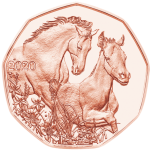
The coin features a foal in the foreground frolicking happily through a meadow while its mother keeps a watchful eye close behind. The lower part of the coin is decorated with an assortment of spring flowers.
Face Value: 5 Euro
Diameter: 28,5 mm
Copper: 99,9%
Total Weight: 8,5 g
Comes without packaging
Few animals have had a bigger impact on humans than the horse. Its power, beauty and sensitivity make the horse one of the most beloved members of the animal kingdom, not least among young female riders, many of whom form a profound and enduring bond with their loyal steed. The Easter Coin 2020 celebrates this unique bond.
From being the subject of countless prehistoric cave paintings, to the leading form of human transport for more than five millennia, the horse has played an unparalleled role in the development of society. The most iconic of all European horse breeds is the Lipizzaner, made world famous through its connection with the Spanish Riding School in Vienna. Originally from Slovenia, the Lipizzaner has been bred since 1920 at the stud farm at Piber in the Austrian province of Styria, where some 40 foals come into the world every year. Within minutes of their birth, new born foals can stand and, though initially unsteady, are soon galloping joyfully across the alpine meadows.
The coin features a foal in the foreground frolicking happily through a meadow while its mother keeps a watchful eye close behind. The lower part of the coin is decorated with an assortment of spring flowers.
15,00 €
Quality: Uncirculated
Face Value: 10 Euro
Diameter: 32 mm
Material: Copper
Total Weight: 15 g
Mintage: 130 000
Without capsule
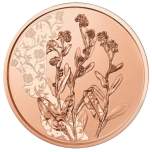
As its name implies, the forget-me-not signifies ‘remember me’ in the language of flowers. But alongside other literal meanings of its common name, the forget-me-not is also a symbol of profound love, remembrance, fidelity and constancy. Giving the flowers at the start of an illicit love affair could be a discreet way to convey a need for trust and confidentiality. Although passionate and romantic love are important elements of their meaning, forget-me-nots can signify deep friendship and familial love as well. In addition, forget-me-nots can be used to convey that the bonds of true love transcend time and space and will continue to exist despite physical separation and even death. Each spring forget-me-nots create a delightful froth of intense blue flowers are a particularly welcome sight when not much else is in bloom. Unlike many other symbolic meanings associated with flowers, those of the forget-me-not have endured – rather like the timeless love and constancy they convey.
Face Value: 10 Euro
Diameter: 32 mm
Material: Copper
Total Weight: 15 g
Mintage: 130 000
Without capsule
As its name implies, the forget-me-not signifies ‘remember me’ in the language of flowers. But alongside other literal meanings of its common name, the forget-me-not is also a symbol of profound love, remembrance, fidelity and constancy. Giving the flowers at the start of an illicit love affair could be a discreet way to convey a need for trust and confidentiality. Although passionate and romantic love are important elements of their meaning, forget-me-nots can signify deep friendship and familial love as well. In addition, forget-me-nots can be used to convey that the bonds of true love transcend time and space and will continue to exist despite physical separation and even death. Each spring forget-me-nots create a delightful froth of intense blue flowers are a particularly welcome sight when not much else is in bloom. Unlike many other symbolic meanings associated with flowers, those of the forget-me-not have endured – rather like the timeless love and constancy they convey.
25,00 €
Issuing Country: France
Face value: 5 €
Metal: Copper/Nickel
Diameter: 29 mm
Quality: B.U.
Mintage: 25 000
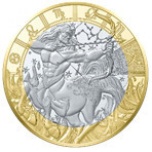
The wheel of the zodiac signs is engraved on the coin's gold-colored crown. One sign stands out from the background because it is larger than the others and has a sandblasted background, different from the smoother one of the others. It is the symbol of Sagittarius. Part of the wheel is hidden by flames, a reminder of this sign's element, fire. A centaur armed with a bow and arrow, ready to be shot, rears up in the center of the composition. In the background, the starry sky features the constellation Sagittarius.
Face value: 5 €
Metal: Copper/Nickel
Diameter: 29 mm
Quality: B.U.
Mintage: 25 000
The wheel of the zodiac signs is engraved on the coin's gold-colored crown. One sign stands out from the background because it is larger than the others and has a sandblasted background, different from the smoother one of the others. It is the symbol of Sagittarius. Part of the wheel is hidden by flames, a reminder of this sign's element, fire. A centaur armed with a bow and arrow, ready to be shot, rears up in the center of the composition. In the background, the starry sky features the constellation Sagittarius.
20,00 €
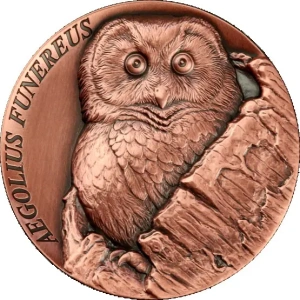
Face value: Samoa 0,25$
Weight: 47 gr
Diameter: 40 mm
Mintage: 3 000
The tawny owl (Strix aluco), also called the brown owl, is commonly found in woodlands across Europe to western Siberia, and has seven recognized subspecies. It is a stocky, medium-sized owl, whose underparts are pale with dark streaks, and whose upper body may be either brown or grey. (In several subspecies, individuals may be of either color.) The tawny owl typically makes its nest in a tree hollow where it can protect its eggs and young against potential predators. It is non-migratory and highly territorial: as a result, when young birds grow up and leave the parental nest, if they cannot find a vacant territory to claim as their own, they will often starve
Weight: 47 gr
Diameter: 40 mm
Mintage: 3 000
The tawny owl (Strix aluco), also called the brown owl, is commonly found in woodlands across Europe to western Siberia, and has seven recognized subspecies. It is a stocky, medium-sized owl, whose underparts are pale with dark streaks, and whose upper body may be either brown or grey. (In several subspecies, individuals may be of either color.) The tawny owl typically makes its nest in a tree hollow where it can protect its eggs and young against potential predators. It is non-migratory and highly territorial: as a result, when young birds grow up and leave the parental nest, if they cannot find a vacant territory to claim as their own, they will often starve
39,00 €