


Lunar Year of the Snake 2025 France 0,25€ Brilliant Uncirculated Coin
Price:
9,90 €
Denomination: 0,25 €
Alloy: Cupro-nickel Nordicgold
Weight: 15,8 g
Diameter: 34 mm
Quality Brilliant Uncirculated
Year: 2025
In Chinese culture, the snake is the most enigmatic animal of the zodiac.
Natives of the Snake sign are rather secretive and cautious. They are renowned for their wise and calm nature.
According to legend, during the race to select the animals of the zodiac, the cunning serpent secretly slipped onto the horse's hoof and took sixth place. This story reflects his strategic intelligence.
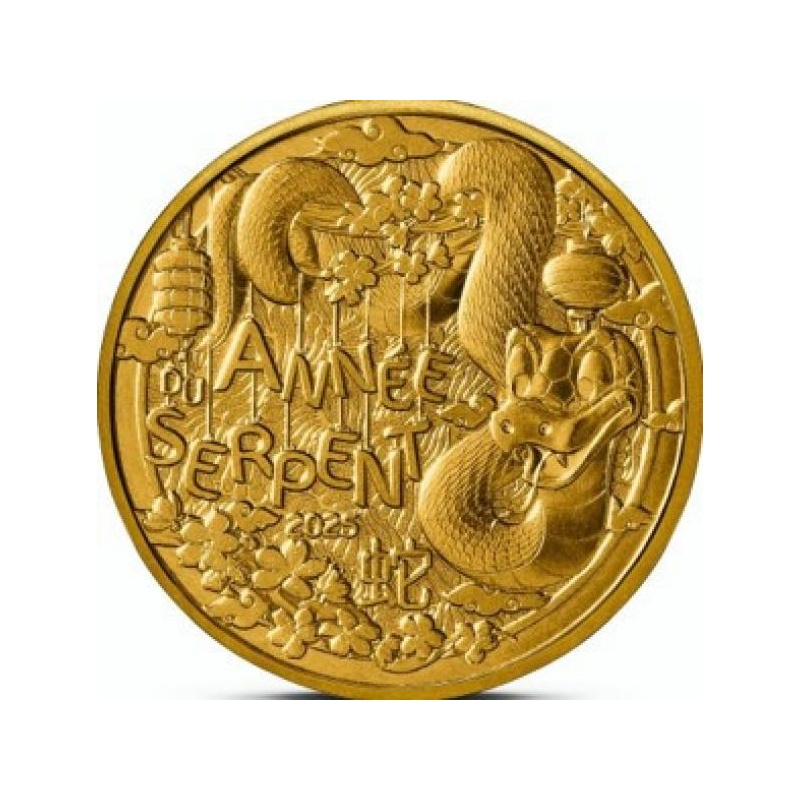
Surrounded by plum blossom, a popular symbol in Chinese history, art, and lanterns, the snake depiction appeals to children. The inscription 'Year of the snake’ and the yeardate appear at the center of the coin. The ideogram of the snake appears below.
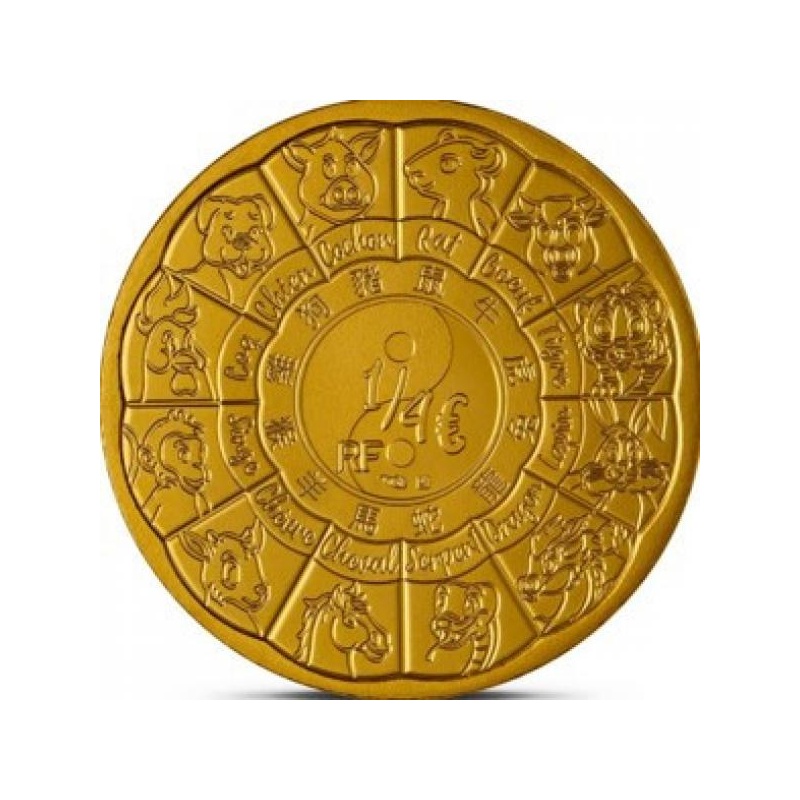
On the reverse side, all the animals of the Chinese zodiac are drawn in a cartoon-like way around the Ying and Yang symbol. A complete cycle of the Chinese zodiac will be composed from 2018 to 2029. Each of these twelve years features an animal from this calendar. The face value is visible in the center of the coin as well as the symbol "RF".
Alloy: Cupro-nickel Nordicgold
Weight: 15,8 g
Diameter: 34 mm
Quality Brilliant Uncirculated
Year: 2025
In Chinese culture, the snake is the most enigmatic animal of the zodiac.
Natives of the Snake sign are rather secretive and cautious. They are renowned for their wise and calm nature.
According to legend, during the race to select the animals of the zodiac, the cunning serpent secretly slipped onto the horse's hoof and took sixth place. This story reflects his strategic intelligence.
Surrounded by plum blossom, a popular symbol in Chinese history, art, and lanterns, the snake depiction appeals to children. The inscription 'Year of the snake’ and the yeardate appear at the center of the coin. The ideogram of the snake appears below.
On the reverse side, all the animals of the Chinese zodiac are drawn in a cartoon-like way around the Ying and Yang symbol. A complete cycle of the Chinese zodiac will be composed from 2018 to 2029. Each of these twelve years features an animal from this calendar. The face value is visible in the center of the coin as well as the symbol "RF".
Kollektsioon
Denomination: 0,25 €
Alloy: Cupro-nickel Nordicgold
Weight: 15,8 g
Diameter: 34 mm
Quality Brilliant Uncirculated
Year: 2023
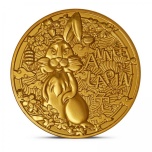
Surrounded by plum blossom, a popular symbol in Chinese history, art, and lanterns, the rabbit’s depiction appeals to children. The inscription 'Year of the rabbit’ and the year date appear at the center of the coin. The ideogram of the rabbit appears below.
Alloy: Cupro-nickel Nordicgold
Weight: 15,8 g
Diameter: 34 mm
Quality Brilliant Uncirculated
Year: 2023
Surrounded by plum blossom, a popular symbol in Chinese history, art, and lanterns, the rabbit’s depiction appeals to children. The inscription 'Year of the rabbit’ and the year date appear at the center of the coin. The ideogram of the rabbit appears below.
9,90 €
Similar products
Face value: Samoa 0,25$
Weight: 40gr
Diameter: 40 mm
Mintage: 6666
Proof copper coin with partial gold plating
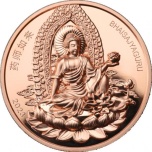
In East Asian Buddhism, the Twelve Heavenly Generals or Twelve Divine Generals are the protective deities, or yaksha, of Bhaisajyaguru, the buddha of healing. They are introduced in the Bhai?ajyaguruvaiduryaprabharaja Sutra. They are collectively named Shí'èr Shén Jiang Mahala--Honji to this General is Bhaisajyaguru, It is the protective deity of zodiac rabbit.
Weight: 40gr
Diameter: 40 mm
Mintage: 6666
Proof copper coin with partial gold plating
In East Asian Buddhism, the Twelve Heavenly Generals or Twelve Divine Generals are the protective deities, or yaksha, of Bhaisajyaguru, the buddha of healing. They are introduced in the Bhai?ajyaguruvaiduryaprabharaja Sutra. They are collectively named Shí'èr Shén Jiang Mahala--Honji to this General is Bhaisajyaguru, It is the protective deity of zodiac rabbit.
39,00 €
Monetary Denom: NZD 5.00
Dimensions: 65m
Standard Weight: 31.1g
Silver: 99.9%
Year Dated: 2025
Max Mintage: 500
Country of Issue: Tokelau
The Year of the Snake will commence on 29 January 2025. In Chinese element theory, each zodiac sign is associated with one of the five elements: metal, wood, water, fire and earth and each element appears in a 60 year cycle. 2025 represents the year of the Fire Snake. It is said people born in this year are intuitive, strategic and ingelligent, exuding charm, elegance and wisdom.
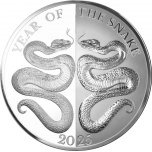
This astounding 65mm 1oz pure silver coin features a dynamic image of a snake in mirror image. The coin is created in proof condition by BH Mayer Mint, with the Snake on one side sculpted proof with a highly polished proof table, the other side with a frosted table and polished Snake. As with each of the previous issues, only 500 coins will be released.
These will be the second coin in this series to feature the effigy of King Charles III.
According to one legend, there is a reason for the order of the animals in the cycle. A race was held to cross a great river, and the order of the animals in the cycle was based upon their order in finishing the race. In this story, the snake compensated for not being the best swimmer by hitching a hidden ride on the Horse's hoof. When the horse was about to cross the finish line, the snake jumped out, scaring the horse, and thus edging it out for sixth place. The same twelve animals are also used to symbolize the cycle of hours in the day, each being associated with a two-hour time period. The hour of the snake is 9:00 to 11:00 a.m., the time when the Sun warms up the Earth, and snakes are said to slither out of their holes. The month of the snake is the 4th month of the Chinese lunar calendar and it usually falls within the months of May through June depending on the Chinese to Gregorian calendar conversion. The reason the animal signs are referred to as zodiacal is that one's personality is said to be influenced by the animal signs ruling the time of birth, together with elemental aspects of the animal signs within the sexagenary cycle. Similarly, the year governed by a particular animal sign is supposed to be characterized by it, with the effects particularly strong for people who were born in any year governed by the same animal sign.
Dimensions: 65m
Standard Weight: 31.1g
Silver: 99.9%
Year Dated: 2025
Max Mintage: 500
Country of Issue: Tokelau
The Year of the Snake will commence on 29 January 2025. In Chinese element theory, each zodiac sign is associated with one of the five elements: metal, wood, water, fire and earth and each element appears in a 60 year cycle. 2025 represents the year of the Fire Snake. It is said people born in this year are intuitive, strategic and ingelligent, exuding charm, elegance and wisdom.
This astounding 65mm 1oz pure silver coin features a dynamic image of a snake in mirror image. The coin is created in proof condition by BH Mayer Mint, with the Snake on one side sculpted proof with a highly polished proof table, the other side with a frosted table and polished Snake. As with each of the previous issues, only 500 coins will be released.
These will be the second coin in this series to feature the effigy of King Charles III.
According to one legend, there is a reason for the order of the animals in the cycle. A race was held to cross a great river, and the order of the animals in the cycle was based upon their order in finishing the race. In this story, the snake compensated for not being the best swimmer by hitching a hidden ride on the Horse's hoof. When the horse was about to cross the finish line, the snake jumped out, scaring the horse, and thus edging it out for sixth place. The same twelve animals are also used to symbolize the cycle of hours in the day, each being associated with a two-hour time period. The hour of the snake is 9:00 to 11:00 a.m., the time when the Sun warms up the Earth, and snakes are said to slither out of their holes. The month of the snake is the 4th month of the Chinese lunar calendar and it usually falls within the months of May through June depending on the Chinese to Gregorian calendar conversion. The reason the animal signs are referred to as zodiacal is that one's personality is said to be influenced by the animal signs ruling the time of birth, together with elemental aspects of the animal signs within the sexagenary cycle. Similarly, the year governed by a particular animal sign is supposed to be characterized by it, with the effects particularly strong for people who were born in any year governed by the same animal sign.
159,00 €
Materiall: CuNi
Weight: 7 g
Diameter: 22,25 mm
Mintage:
An extraordinary collection accompanies the approach to the Olympic and Paralympic Winter Games of Milan Cortina 2026 and celebrates its spirit through its most iconic symbols: the logo of the event, the journey of the flame, the mascot and the winter disciplines associated with the host locations. Each coin in the collection is a tribute to the magic of sport and to Italy.
Obverse: In the centre, the official logo of the Milano Cortina 2026 Winter Olympic Games. Arch-shaped, the inscription "Repubblica Italiana". In the right field, the "R", identifying the Mint of Rome and "2025", the year of the coin’s issue.
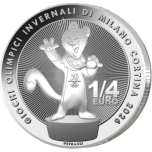
Reverse: In the centre, Tina, official mascot of the Olympic Games, standing on a podium while celebrating the victory of the medal. Arch-shaped, the inscription “GIOCHI OLIMPICI INVERNALI DI MILANO CORTINA 2026”; bottom right “1/4 EURO”, the coin’s value. Below “PETRASSI”, signature of the designer. In the background a sunburst decoration.
Weight: 7 g
Diameter: 22,25 mm
Mintage:
An extraordinary collection accompanies the approach to the Olympic and Paralympic Winter Games of Milan Cortina 2026 and celebrates its spirit through its most iconic symbols: the logo of the event, the journey of the flame, the mascot and the winter disciplines associated with the host locations. Each coin in the collection is a tribute to the magic of sport and to Italy.
Obverse: In the centre, the official logo of the Milano Cortina 2026 Winter Olympic Games. Arch-shaped, the inscription "Repubblica Italiana". In the right field, the "R", identifying the Mint of Rome and "2025", the year of the coin’s issue.
Reverse: In the centre, Tina, official mascot of the Olympic Games, standing on a podium while celebrating the victory of the medal. Arch-shaped, the inscription “GIOCHI OLIMPICI INVERNALI DI MILANO CORTINA 2026”; bottom right “1/4 EURO”, the coin’s value. Below “PETRASSI”, signature of the designer. In the background a sunburst decoration.
8,00 €
Face Value: 3 Euro
Quality: B.U,
Diameter: 34 mm
Metal: Copper/nickel
Weight: 16 g
Mintage: 65 000
Comes without packaging
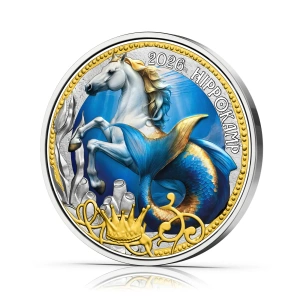
The Mythical Creatures series continues its journey into the world of legends with the 3-euro Hippocampus coin. The hippocampus is an ancient hybrid creature, part horse and part fish, which, according to mythology, pulled the chariot of Poseidon, god of the sea. Its name is derived from the Greek words for horse (hippos) and sea monster (kampos). On the colour-printed coin, a white horse with a shimmering fish tail rears up, surrounded by seaweed and coral. Under UV light, the motif appears to come to life. The obverse shows an ornately decorated key with the letter F for mythical creature and a stylised sun.
Quality: B.U,
Diameter: 34 mm
Metal: Copper/nickel
Weight: 16 g
Mintage: 65 000
Comes without packaging
The Mythical Creatures series continues its journey into the world of legends with the 3-euro Hippocampus coin. The hippocampus is an ancient hybrid creature, part horse and part fish, which, according to mythology, pulled the chariot of Poseidon, god of the sea. Its name is derived from the Greek words for horse (hippos) and sea monster (kampos). On the colour-printed coin, a white horse with a shimmering fish tail rears up, surrounded by seaweed and coral. Under UV light, the motif appears to come to life. The obverse shows an ornately decorated key with the letter F for mythical creature and a stylised sun.
39,00 €
Face value: 0,25 CAD
Materiall: CuNi
Weight: 6,990 g
Diameter: 28mm
Quality: B.U.
Mintage: 350 000
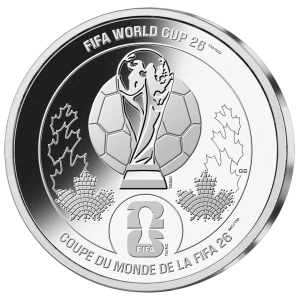
There’s no other feeling like it—a winning goal at the FIFA World CupTM/MC sends waves of euphoria through the stadium and beyond, uniting fans everywhere in celebration.
In 2026, Canada welcomes the world’s biggest sporting stage, and with it, the chance to be part of something unforgettable.
Materiall: CuNi
Weight: 6,990 g
Diameter: 28mm
Quality: B.U.
Mintage: 350 000
There’s no other feeling like it—a winning goal at the FIFA World CupTM/MC sends waves of euphoria through the stadium and beyond, uniting fans everywhere in celebration.
In 2026, Canada welcomes the world’s biggest sporting stage, and with it, the chance to be part of something unforgettable.
19,00 €