

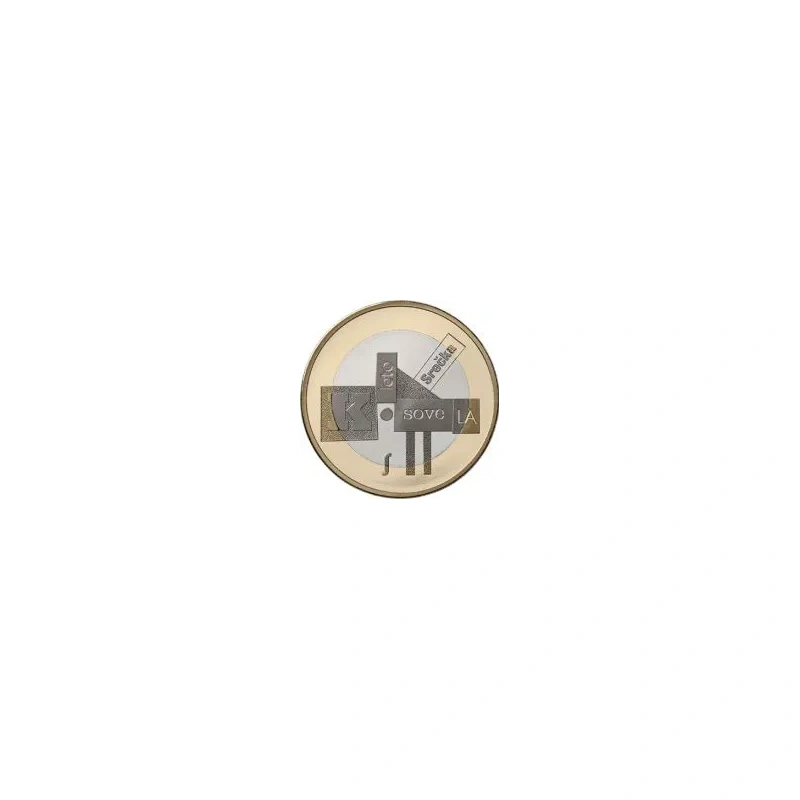
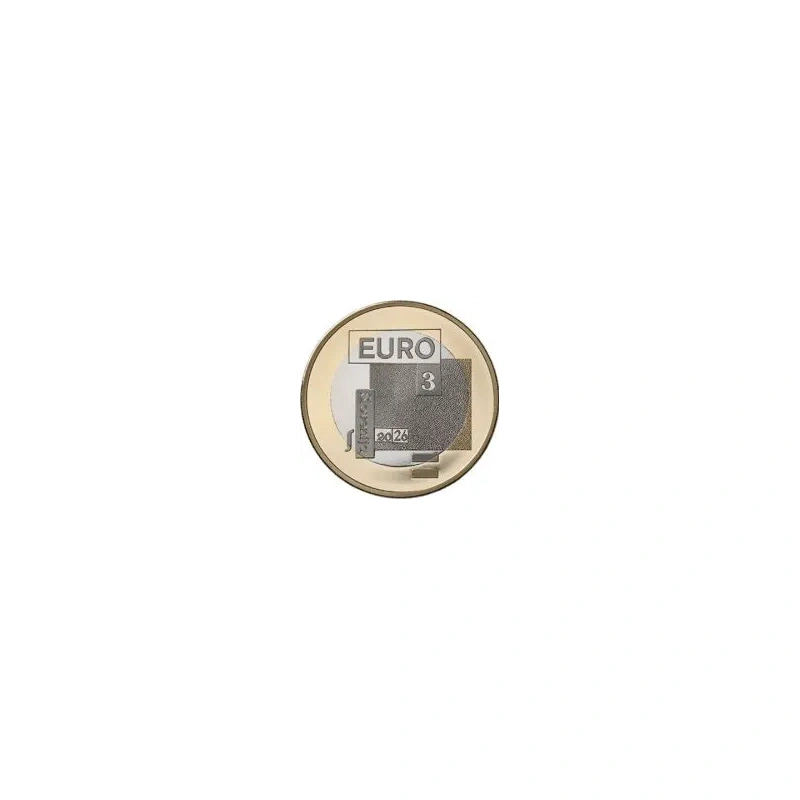
Slovenia 3 € commemorative coin 2026 - The Year of the Poet Srečko Kosovel
Price:
10,00 €
Face vakue: 3 euro
Diameter; 32 mm
Weight: 15,0 g
Alloy: Bimetal;CuNi, nordic gold
Quality: UNC
Mintaga. 60 000
Diameter; 32 mm
Weight: 15,0 g
Alloy: Bimetal;CuNi, nordic gold
Quality: UNC
Mintaga. 60 000
Kollektsioon
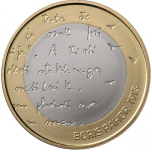
Slovenia 3 € commemorative coin 2023 -110th anniversary of the birth of Slovenian writer Boris Pahor
Face vakue: 3 euro
Diameter; 32 mm
Weight: 15,0 g
Alloy: Bimetal;CuNi, nordic gold
Quality: UNC
Diameter; 32 mm
Weight: 15,0 g
Alloy: Bimetal;CuNi, nordic gold
Quality: UNC
9,00 €
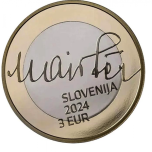
Face vakue: 3 euro
Diameter; 32 mm
Weight: 15,0 g
Alloy: Bimetal;CuNi, nordic gold
Quality: UNC
Commemorative coin dedicated to the Day of Slovenian Sport.
• The Day of Slovenian Sports is a national holiday celebrating the international successes of Slovenian athletes.
Diameter; 32 mm
Weight: 15,0 g
Alloy: Bimetal;CuNi, nordic gold
Quality: UNC
Commemorative coin dedicated to the Day of Slovenian Sport.
• The Day of Slovenian Sports is a national holiday celebrating the international successes of Slovenian athletes.
9,00 €
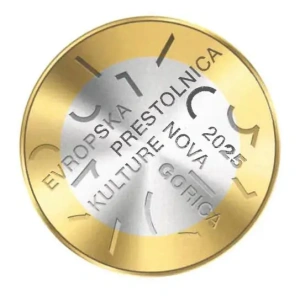
Face vakue: 3 euro
Diameter; 32 mm
Weight: 15,0 g
Alloy: Bimetal;CuNi, nordic gold
Quality: UNC
Mintage: 60 000
Diameter; 32 mm
Weight: 15,0 g
Alloy: Bimetal;CuNi, nordic gold
Quality: UNC
Mintage: 60 000
9,00 €
Similar products
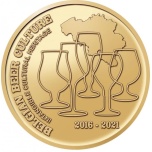
The 2.5 euro coin is minted in BU-quality and is issued in two language versions. On the coincard, a close-up of a beer will quench your thirst. On the coin you will see the Belgian beer culture in a nutshell; each beer has its own matching type of glass!
Details
• Official issue to commemorate 5 years of Belgian beer culture
• Thirst quenching packaging in two language versions
• Limited mintage of max. 20,000 coins
• Legal tender in Belgium, not for circulation
Specifications
• Metal: Brass
• Weight: 10.50 g
• Diameter: 25.65 mm
• Quality: Brilliant Uncirculated (BU) / FDC
• Design: Iris Bruijns (obverse), Luc Luycx (reverse)
• Max. mintage: 20,000 coins worldwide (distributed in 2 language versions in a coincard and 7,500 coins are included in the annual FDC set 2021)
Details
• Official issue to commemorate 5 years of Belgian beer culture
• Thirst quenching packaging in two language versions
• Limited mintage of max. 20,000 coins
• Legal tender in Belgium, not for circulation
Specifications
• Metal: Brass
• Weight: 10.50 g
• Diameter: 25.65 mm
• Quality: Brilliant Uncirculated (BU) / FDC
• Design: Iris Bruijns (obverse), Luc Luycx (reverse)
• Max. mintage: 20,000 coins worldwide (distributed in 2 language versions in a coincard and 7,500 coins are included in the annual FDC set 2021)
19,00 €
Quality: Special Uncirculated
Face Value: 5 Euro
Diameter: 28,5 mm
Copper: 99,9%
Total Weight: 8,5 g
Mintage: 50 000
Comes without packaging
Why talk when you can dance instead? That’s how bees communicate. Their ‘waggle dance’ is a wonderful phenomenon and one that not only bees themselves benefit from. Other living creatures, including humans, do so too, because bees are a vital part of our ecosystem: their welfare is our welfare.
In the early 20th century, the unusual behaviour of honeybees piqued the curiosity of behavioural scientist Karl von Frisch (1886–1982), who grew up in Vienna. He was intrigued by the way the insects sometimes move in circles and perform a figure of-eight ‘waggle dance’. In time, von Frisch discovered that when doing so, bees are in fact ‘speaking’ a dance language to the other members of their hive to show them where they can find pollen and nectar. Although originally disputed by other scientists, von Frisch’s theory eventually earned him the Nobel Prize in 1973.
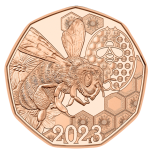
The ‘round dance’, in which bees walks in a circle, turn around, then walk the same circle in the opposite direction, tells watching bees that there are flowers with pollen in the immediate vicinity of the hive. When the food source is further away, the waggle dance tells the watching bees how far it is and in which direction they can find it. A representation of the waggle dance is shown in the background on the coin’s reverse, behind a bee in flight and above a decorative honeycomb deign. The obverse of the nine-sided coin shows the coats of arms of all the provinces of Austria. Not just for nature lovers, whether in copper or silver, Waggle Dance makes for a great spring or Easter gift.
In the early 20th century, the unusual behavior of honey bees piqued the curiosity of behavioral scientist Karl von Frisch (1886–1982), who grew up in Vienna. He was intrigued by the way the insects sometimes move in circles and perform a figure-of-eight ‘waggle dance’. In time, von Frisch discovered that when doing so, bees are in fact ‘speaking’ a dance language to the other members of their hive to show them where they can find pollen and nectar. Although originally disputed by other scientists, von Frisch’s theory eventually earned him the Nobel Prize in 1973 for achievements in comparative behavioural physiology and pioneering work in communication between insects. It is not just bees themselves that benefit from this wonderful phenomenon, as other living creatures, including humans, do so too. Honey bees, wild bees and bumble bees are a vital part of the ecosystem: their welfare is our welfare.
Face Value: 5 Euro
Diameter: 28,5 mm
Copper: 99,9%
Total Weight: 8,5 g
Mintage: 50 000
Comes without packaging
Why talk when you can dance instead? That’s how bees communicate. Their ‘waggle dance’ is a wonderful phenomenon and one that not only bees themselves benefit from. Other living creatures, including humans, do so too, because bees are a vital part of our ecosystem: their welfare is our welfare.
In the early 20th century, the unusual behaviour of honeybees piqued the curiosity of behavioural scientist Karl von Frisch (1886–1982), who grew up in Vienna. He was intrigued by the way the insects sometimes move in circles and perform a figure of-eight ‘waggle dance’. In time, von Frisch discovered that when doing so, bees are in fact ‘speaking’ a dance language to the other members of their hive to show them where they can find pollen and nectar. Although originally disputed by other scientists, von Frisch’s theory eventually earned him the Nobel Prize in 1973.
The ‘round dance’, in which bees walks in a circle, turn around, then walk the same circle in the opposite direction, tells watching bees that there are flowers with pollen in the immediate vicinity of the hive. When the food source is further away, the waggle dance tells the watching bees how far it is and in which direction they can find it. A representation of the waggle dance is shown in the background on the coin’s reverse, behind a bee in flight and above a decorative honeycomb deign. The obverse of the nine-sided coin shows the coats of arms of all the provinces of Austria. Not just for nature lovers, whether in copper or silver, Waggle Dance makes for a great spring or Easter gift.
In the early 20th century, the unusual behavior of honey bees piqued the curiosity of behavioral scientist Karl von Frisch (1886–1982), who grew up in Vienna. He was intrigued by the way the insects sometimes move in circles and perform a figure-of-eight ‘waggle dance’. In time, von Frisch discovered that when doing so, bees are in fact ‘speaking’ a dance language to the other members of their hive to show them where they can find pollen and nectar. Although originally disputed by other scientists, von Frisch’s theory eventually earned him the Nobel Prize in 1973 for achievements in comparative behavioural physiology and pioneering work in communication between insects. It is not just bees themselves that benefit from this wonderful phenomenon, as other living creatures, including humans, do so too. Honey bees, wild bees and bumble bees are a vital part of the ecosystem: their welfare is our welfare.
19,00 €
Issuing Country: France
Face value: 5 €
Metal: Copper/Nickel
Weight: 11,7 g
Diameter: 29 mm
Quality: B.U.
Mintage: 25 000
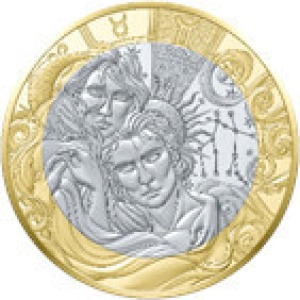
The wheel of the zodiac signs is engraved on the coin's gold-colored crown. One sign stands out from the background because it is larger than the others and has a sandblasted background, different from the smoother one of the others. It is the Gemini symbol. In reference to the sign's element, air, part of the wheel is hidden by spirals of mist. In the middle of these, twins, a man and a woman, are intertwined. Behind them, the sun and a quarter-moon stand out against a starry sky featuring the Gemini constellation.
Face value: 5 €
Metal: Copper/Nickel
Weight: 11,7 g
Diameter: 29 mm
Quality: B.U.
Mintage: 25 000
The wheel of the zodiac signs is engraved on the coin's gold-colored crown. One sign stands out from the background because it is larger than the others and has a sandblasted background, different from the smoother one of the others. It is the Gemini symbol. In reference to the sign's element, air, part of the wheel is hidden by spirals of mist. In the middle of these, twins, a man and a woman, are intertwined. Behind them, the sun and a quarter-moon stand out against a starry sky featuring the Gemini constellation.
20,00 €
Denomination: 0,25 €
Alloy: Cupro-nickel Nordicgold
Weight: 15,8 g
Diameter: 34 mm
Quality Brilliant Uncirculated
Year: 2026
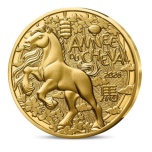
Surrounded by plum blossom, a symbol much used in Chinese history and art, and lanterns, the horse is depicted in a joyful, childlike manner. The inscription ‘Year of the Horse’ followed by the year 2026 appears in the centre of the coin. The ideogram of the horse appears at the bottom right of the coin. On the reverse, all the animals of the Chinese zodiac are drawn in a childlike way around the Ying and Yang symbol. A complete cycle of the Chinese zodiac begins in 2018 and lasts until 2029. Each of the twelve years in this period is represented by one of the zodiac animals. The face value is visible in the centre of the denomination and the wording ‘RF’.
Alloy: Cupro-nickel Nordicgold
Weight: 15,8 g
Diameter: 34 mm
Quality Brilliant Uncirculated
Year: 2026
Surrounded by plum blossom, a symbol much used in Chinese history and art, and lanterns, the horse is depicted in a joyful, childlike manner. The inscription ‘Year of the Horse’ followed by the year 2026 appears in the centre of the coin. The ideogram of the horse appears at the bottom right of the coin. On the reverse, all the animals of the Chinese zodiac are drawn in a childlike way around the Ying and Yang symbol. A complete cycle of the Chinese zodiac begins in 2018 and lasts until 2029. Each of the twelve years in this period is represented by one of the zodiac animals. The face value is visible in the centre of the denomination and the wording ‘RF’.
9,90 €
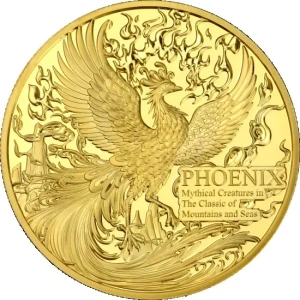
Country of legal tender: Samoa
Face value: 0,2 Tala
Metal: Copper/Nickel
Weight: 24 g
Maximum Mintage: 5000
Year Dated: 2026
The Classic of Mountains and Seas is an ancient Chinese book from the pre-Qin period, rich in myths, legends, and geographical knowledge. It records mountains, rivers, ethnic groups, medicines, and famous stories such as Kuafu chasing the sun and Jingwei filling the sea. The book also describes many mysterious mythical creatures that reflect ancient people’s imagination and understanding of the world. One passage tells of a phoenix-like bird with five-colored markings symbolizing virtue, righteousness, etiquette, benevolence, and integrity. Its appearance is said to bring peace and harmony to the world.
Face value: 0,2 Tala
Metal: Copper/Nickel
Weight: 24 g
Maximum Mintage: 5000
Year Dated: 2026
The Classic of Mountains and Seas is an ancient Chinese book from the pre-Qin period, rich in myths, legends, and geographical knowledge. It records mountains, rivers, ethnic groups, medicines, and famous stories such as Kuafu chasing the sun and Jingwei filling the sea. The book also describes many mysterious mythical creatures that reflect ancient people’s imagination and understanding of the world. One passage tells of a phoenix-like bird with five-colored markings symbolizing virtue, righteousness, etiquette, benevolence, and integrity. Its appearance is said to bring peace and harmony to the world.
39,00 €