
Monaco 1 € UNC 2025
Price:
8,00 €
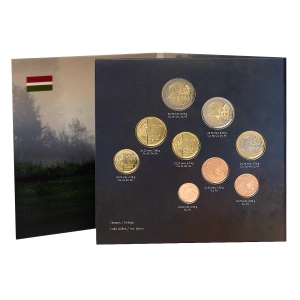
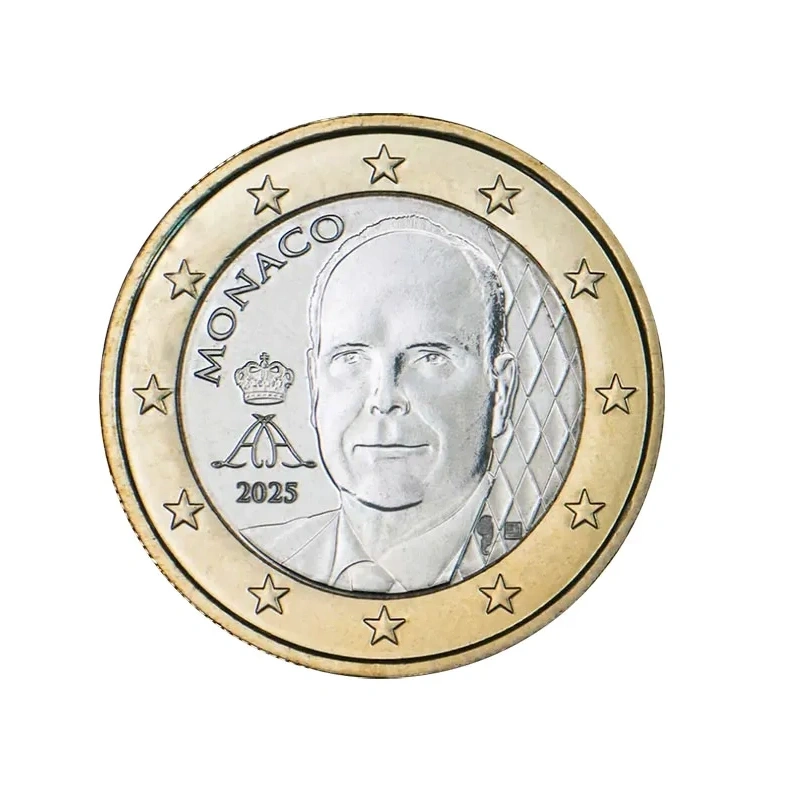
The third series shows, on the €2 and €1 coins, a portrait of HSH Prince Albert II. HSH Prince Albert’s monogram is depicted on the 10, 20 and 50-cent coins. The coat of arms of the Sovereign Princes of Monaco is the main feature of the design on the 1, 2 and 5-cent coins.
Kollektsioon
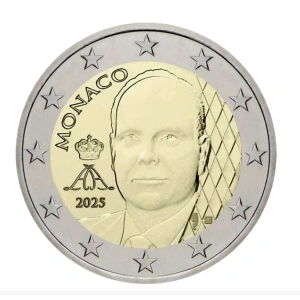
Monaco käibemünte satub üliväikese triaaźi tõttu vabasse ringlusesse väga harva.
2025. aastast on kasutusel kolmas mùndiseeria. 2-eurosel mündil on Tema Kuningliku Kõrguse vürst Albert II uus kujundusega mùndiportree.
Münt on ringlemata (uncirculated) kvaliteedis. Erinevad aastad. Kilepakend.
2025. aastast on kasutusel kolmas mùndiseeria. 2-eurosel mündil on Tema Kuningliku Kõrguse vürst Albert II uus kujundusega mùndiportree.
Münt on ringlemata (uncirculated) kvaliteedis. Erinevad aastad. Kilepakend.
12,00 €
Similar products
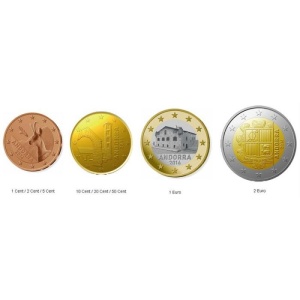
Official Coin set Brilliant Uncirculated with 8 coins: from 1 cent to 2 euro. Mintage 10 500 sets-
This is the official mint set issued by Andorra. It features all eight of the country's euro coins.
The obverses follow the theme of landscape, nature, flora and fauna of Andorra for the 1-, 2- and 5-cent coins; Romanesque art for the 10-, 20- and 50-cent coins; and the Casa de la Vall (historic Parliament building) for the €1 coin. The coat of arms of the Principality of Andorra is featured on the €2 coin.
Ruben da Silva Carpio’s design of a chamois, a goat-antelope of the Pyrenees, with a bearded vulture in the sky, was selected for the smallest denominations. Pere Moles’ design of the Santa Coloma Church was selected for the 10-, 20-, and 50-cent coins, and Jordi Puy designed the €1 coin
This is the official mint set issued by Andorra. It features all eight of the country's euro coins.
The obverses follow the theme of landscape, nature, flora and fauna of Andorra for the 1-, 2- and 5-cent coins; Romanesque art for the 10-, 20- and 50-cent coins; and the Casa de la Vall (historic Parliament building) for the €1 coin. The coat of arms of the Principality of Andorra is featured on the €2 coin.
Ruben da Silva Carpio’s design of a chamois, a goat-antelope of the Pyrenees, with a bearded vulture in the sky, was selected for the smallest denominations. Pere Moles’ design of the Santa Coloma Church was selected for the 10-, 20-, and 50-cent coins, and Jordi Puy designed the €1 coin
59,00 €
Latvia is composed of five historical regions of the Latvian nation: Vidzeme, Latgale, Kurzeme, Zemgale, and Sēlija. Sēlija was referenced in historical records as early as the 13th century, yet it was not until 2021, with its formal inclusion in the Law on Historical Regions of Latvia, that Sēlija was defined as a distinct cultural and historical region. The carmine-white-moss green flag of Sēlija and the coat of arms of the historical region were approved in 2023. The coat of arms, which is featured on the reverse of the coin, has been crafted by heraldic artist Edgars Sims. Much like the lion of Kurzeme and the elk of Zemgale, the coat of arms of Sēlija incorporates elements of the visual identity of the Duchy of Kurzeme and Zemgale, a symbol that has been portrayed in two distinct forms over the centuries – both with an elk and with a stag. The State Heraldry Commission has developed the basic principles for designing the Sēlija coat of arms, which, in contrast to other coats of arms, was crafted through a collaborative effort with the local communities, municipalities, and civic organisations of Sēlija. Embellishing it is a majestic animal, its crown adorned with elaborate antlers and its head held high – a silver stag set against a red background.
The Sēlija coat of arms marks the conclusion of the series of 2 euro commemorative coins, each honouring one of Latvia's five historical regions.
59,00 €
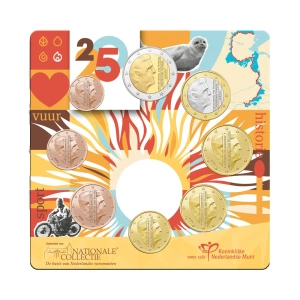
The euro coin series comprises eight different denominations: 1, 2, 5, 10, 20 and 50 cent, €1 and €2. The euro coins have a common side and a national side. The national side indicates the issuing country. The common sides of the coins were designed by Mr Luc Luycx of the Royal Belgian Mint.
They show images of the European Union or of Europe and symbolise the unity of the EU. The 1, 2 and 5 cent coins show Europe in relation to Africa and Asia on a globe.
Croatia has chosen four designs for their national sides of the euro coins, all featuring the distinctive Croatian chequerboard pattern in the background. All the coins also depict the 12 stars of the European flag.
The €2 coin features a map of Croatia on a chequerboard background. The design, by Ivan Šivak, includes the year of issuance and the inscription “HRVATSKA”, the country’s name in Croatian.
Edge lettering of the €2 coin: “O LIJEPA O DRAGA O SLATKA SLOBODO” (“Oh beautiful, oh dear, oh sweet freedom”), a line from Ivan Gundulić’s famous play, Dubravka.
The €1 coin shows a marten on a chequerboard background and was designed by Jagor Šunde, David Čemeljić and Fran Zekan. The marten is a small mammal that lent its name to the country’s former currency, the kuna. The design includes the year of issuance and the inscription “HRVATSKA”, the country’s name in Croatian.
The 50 cent , 20 cent and. 10 cent coin features a portrait of inventor and engineer Nikola Tesla, who developed alternating current technology. The coin was designed by Ivan Domagoj Račić and includes the year of issuance and the inscription “HRVATSKA”, the country’s name in Croatian.
The 1, 2 and 5 -cent coin shows a motif of the letters “HR” in the angular Glagolitic script. The Glagolitic alphabet is the oldest known Slavic script and was used in Croatia until the 19th century. The coin was designed by Maja Škripelj and includes the year of issuance and the inscription “HRVATSKA”, the country’s name in Croatian.
They show images of the European Union or of Europe and symbolise the unity of the EU. The 1, 2 and 5 cent coins show Europe in relation to Africa and Asia on a globe.
Croatia has chosen four designs for their national sides of the euro coins, all featuring the distinctive Croatian chequerboard pattern in the background. All the coins also depict the 12 stars of the European flag.
The €2 coin features a map of Croatia on a chequerboard background. The design, by Ivan Šivak, includes the year of issuance and the inscription “HRVATSKA”, the country’s name in Croatian.
Edge lettering of the €2 coin: “O LIJEPA O DRAGA O SLATKA SLOBODO” (“Oh beautiful, oh dear, oh sweet freedom”), a line from Ivan Gundulić’s famous play, Dubravka.
The €1 coin shows a marten on a chequerboard background and was designed by Jagor Šunde, David Čemeljić and Fran Zekan. The marten is a small mammal that lent its name to the country’s former currency, the kuna. The design includes the year of issuance and the inscription “HRVATSKA”, the country’s name in Croatian.
The 50 cent , 20 cent and. 10 cent coin features a portrait of inventor and engineer Nikola Tesla, who developed alternating current technology. The coin was designed by Ivan Domagoj Račić and includes the year of issuance and the inscription “HRVATSKA”, the country’s name in Croatian.
The 1, 2 and 5 -cent coin shows a motif of the letters “HR” in the angular Glagolitic script. The Glagolitic alphabet is the oldest known Slavic script and was used in Croatia until the 19th century. The coin was designed by Maja Škripelj and includes the year of issuance and the inscription “HRVATSKA”, the country’s name in Croatian.
15,00 €
Bulgaria has chosen three designs for their national sides of the euro coins. All the coins also depict the 12 stars of the European flag.
The €2 coin features a portrait of Saint Paisius of Hilendar, a key figure of the Bulgarian national revival and author of Istoriya Slavyanobolgarskaya (Slavo-Bulgarian History). The design includes the year of issuance, the inscription “БЪЛГАРИЯ” (the country’s name in Bulgarian) and the word “ЕВРО” (“EURO”) in Cyrillic script.
The inscription “БОЖЕ ПАЗИ БЪЛГАРИЯ” (“GOD PROTECT BULGARIA”) is written twice, both normally and in reverse, around the edge of the coin.
The €1 coin depicts Ivan of Rila, the patron saint of Bulgaria and founder of the Rila Monastery. He is shown holding a cross and a scroll. The design includes the year of issuance, the inscription “БЪЛГАРИЯ” (the country’s name in Bulgarian) and the word “ЕВРО” (“EURO”) in Cyrillic script.
The 1, 2, 5, 10, 20 and 50 cent coin features a relief image of the Madara Horseman – an eighth-century rock carving and UNESCO World Heritage Site. The horseman faces right, spearing a lion – a powerful symbol from Bulgaria’s past.
The design also includes the year of issuance, the inscription “БЪЛГАРИЯ” (the country’s name in Bulgarian) and the word “СТОТИНКИ” (“CENT”) in Cyrillic script.
The €2 coin features a portrait of Saint Paisius of Hilendar, a key figure of the Bulgarian national revival and author of Istoriya Slavyanobolgarskaya (Slavo-Bulgarian History). The design includes the year of issuance, the inscription “БЪЛГАРИЯ” (the country’s name in Bulgarian) and the word “ЕВРО” (“EURO”) in Cyrillic script.
The inscription “БОЖЕ ПАЗИ БЪЛГАРИЯ” (“GOD PROTECT BULGARIA”) is written twice, both normally and in reverse, around the edge of the coin.
The €1 coin depicts Ivan of Rila, the patron saint of Bulgaria and founder of the Rila Monastery. He is shown holding a cross and a scroll. The design includes the year of issuance, the inscription “БЪЛГАРИЯ” (the country’s name in Bulgarian) and the word “ЕВРО” (“EURO”) in Cyrillic script.
The 1, 2, 5, 10, 20 and 50 cent coin features a relief image of the Madara Horseman – an eighth-century rock carving and UNESCO World Heritage Site. The horseman faces right, spearing a lion – a powerful symbol from Bulgaria’s past.
The design also includes the year of issuance, the inscription “БЪЛГАРИЯ” (the country’s name in Bulgarian) and the word “СТОТИНКИ” (“CENT”) in Cyrillic script.
15,00 €